
Four Community-Led Projects Selected for California Resilience Implementation Accelerator, Expanding Resilience Efforts Across California
Resilient Cities Catalyst (RCC), in partnership with Climate Resolve and California Forward (CA FWD), has selected four winning projects for seed grant funding and pro bono project development support through the California Resilience Implementation Accelerator. The Accelerator program supports community-driven climate adaptation projects through seed funding, tailored pre-development technical assistance, and connections to aligned funding and financing opportunities that help move projects from planning into implementation.
"Communities across California have the vision and the will to act on climate — what they've too often lacked is the early-stage support to get projects off the ground. The Accelerator closes that gap, and in doing so, builds the foundation for the kind of resilient, broadly shared economic prosperity, both now and in the future,” said Nuin-Tara Key, Chief Operating Officer of California Forward
Chosen through a competitive statewide call for proposals that attracted over 60 applications, the four projects reflect both the urgency of catalytic support for needed resilience action, as well as the high potential of emerging approaches across California’s diverse regions, geographies, and economies. Selected as proof-of-concept initiatives for their innovative approaches and potential to scale, winning projects will receive a total of $80,000 in funding— covering pre-development costs that are often hardest to fund, including costs that are rarely funded through existing programs, and helping teams move projects toward implementation and larger funding opportunities. Projects will receive pro bono technical assistance from RCC, Climate Resolve, and CA FWD to support specific project needs, along with opportunities to engage a curated network of philanthropies and funders.
"This winning portfolio of projects represents the vanguard of a new creative approach to our uncertain future. Adaptation and resilience must be at the core of all new investments in communities everywhere.” said Samuel Carter, Founder and Principal of Resilient Cities Catalyst.
With the State of California serving as co-chair of the Mediterranean Climate Action Partnership (MCAP), an alliance of regions with a mediterranean climate across the globe that drives collaboration to advance climate adaptation and resilience, all selected projects will have the additional opportunity via MCAP to share best practices and participate in knowledge exchange opportunities with regions around the world advancing similar projects and tackling similar challenges.
“The U.S. Chamber of Commerce has determined that every dollar invested in preparedness saves $13 in economic impact, damage, and cleanup costs after the event. The Accelerator program, therefore, promises to not only prevent needless injury but can further aid California’s economy," said Jonathan Parfrey, executive director of Climate Resolve.
About The Selected Projects
South Stockton Community Resiliency Hub (Stockton)
Led by Little Manila Rising, the South Stockton Community Resiliency Hub will expand environmental justice, youth organizing, health and mental health equity, and emergency preparedness programming through a community-centered resilience hub in South Stockton. Located in a community facing high levels of environmental pollution, extreme heat, flood risk, and public health disparities, the project aims to create a trusted gathering space for community programming, emergency response coordination, and resource distribution while advancing a long-term vision for community-led revitalization and climate resilience.
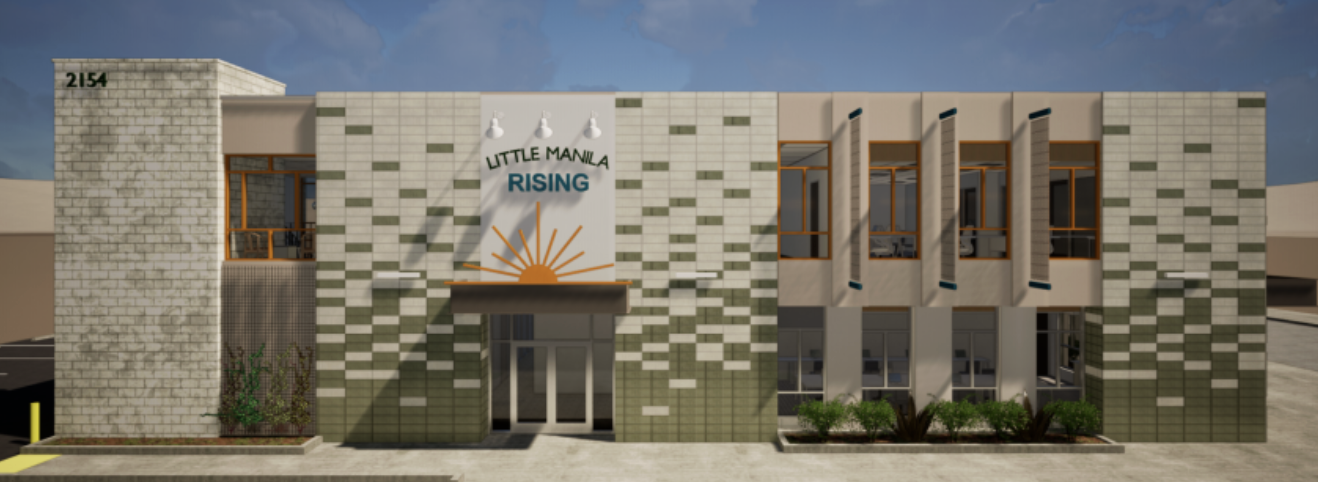
Source: Little Manila Rising
Northside Agriculture Innovation Center
Riverside, Inland Empire
Led by the City of Riverside, the Northside Agriculture Innovation Center is a community-driven initiative advancing climate-smart agriculture, renewable energy integration, workforce development, and food system resilience in California’s Inland Empire. Located in a region facing increasing extreme heat, drought, food system vulnerability, and economic pressures, the project combines cutting-edge technology, solar infrastructure, and public programming to strengthen long-term resilience while creating new economic and educational opportunities for the community.
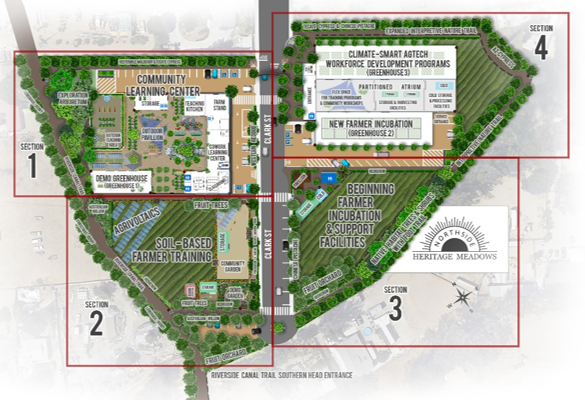
Source: City of Riverside
Tiüvac'a'ai (Healthy Lands) Water Augmentation and Resiliency Project
San Fernando Valley, Greater Los Angeles
Led by the Fernandeño Tataviam Band of Mission Indians (FTBMI), the Tiüvac'a'ai (Healthy Lands) project is a tribally led climate resilience initiative advancing community-informed stormwater capture, urban greening, and water resilience projects in the City of San Fernando. Serving communities facing increasing drought, flooding, and climate-related water challenges, the project builds on the Tribe’s Climate Resiliency Plan and integrates Traditional Ecological Knowledge with nature-based infrastructure approaches to advance long-term watershed and community resilience.
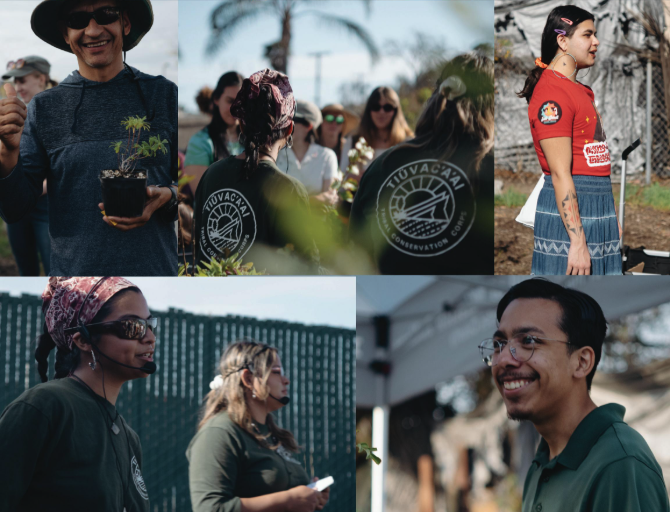
Source: Fernandeño Tataviam Band of Mission Indians, Native Sovereign Nation
City Heights Resilient Business Pilot
City Heights District, San Diego
Led by the City Heights Community Development Corporation (CHCDC), the City Heights Resilient Business Pilot supports immigrant- and refugee-owned small businesses adapting to increasing climate and economic pressures. Based in one of San Diego’s most culturally diverse neighborhoods, where businesses face rising operational costs, extreme heat, flooding from aging infrastructure, and elevated air pollution exposure, the project delivers corridor-based technical assistance, integrating climate resilience strategies, financial stabilization tools, and AI-enabled planning, to help businesses adapt and thrive in place.
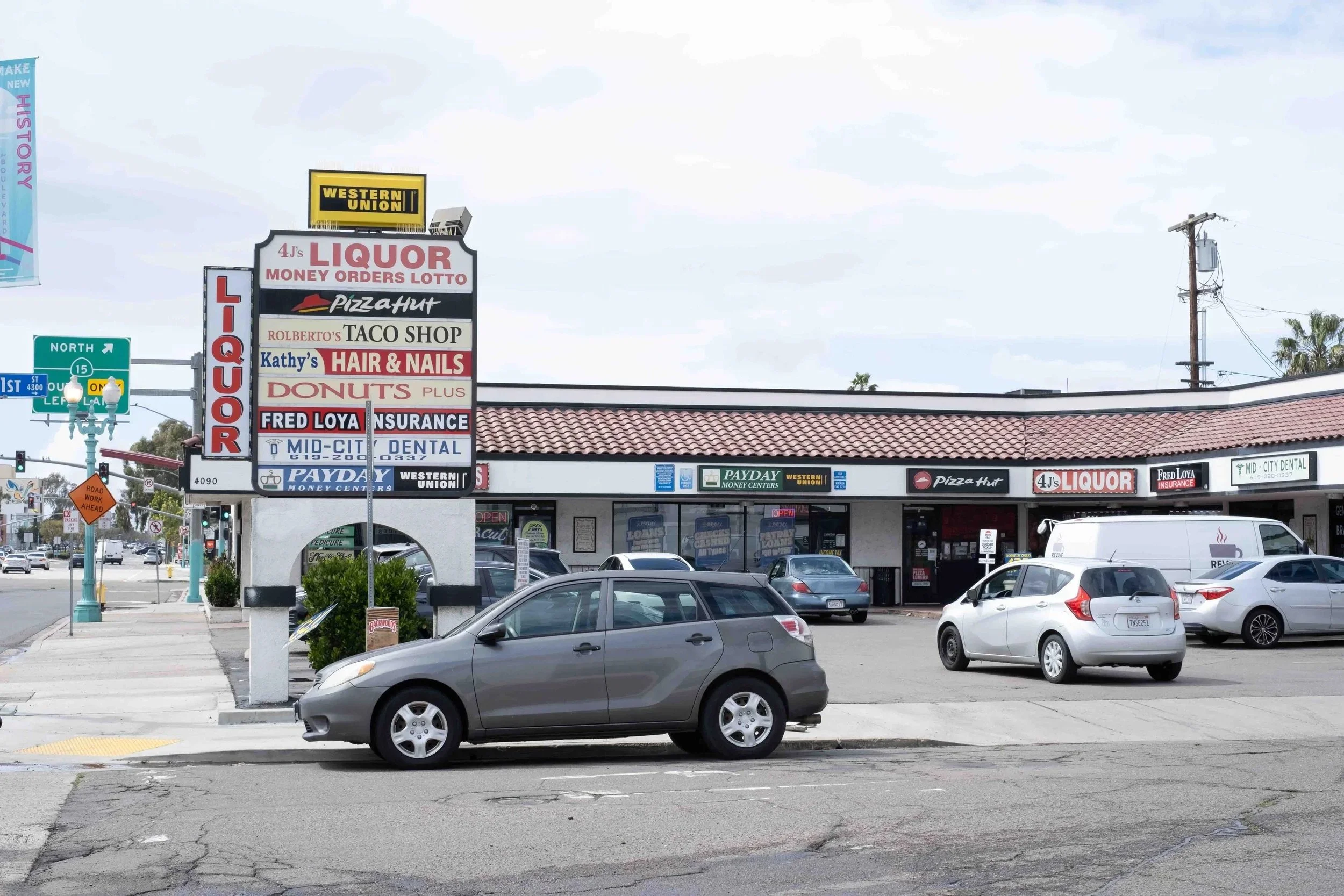
Source: City Heights Community Development Corporation
Designed in response to the pace and scale of today’s challenges, the California Resilience Implementation Accelerator advances high impact, multi-benefit projects and initiatives that benefit historically marginalized and climate-vulnerable California communities. The Accelerator supports local partners with resources, technical assistance, global best practices, and collaborative knowledge exchange and is anchored with philanthropic support from the Conrad N. Hilton Foundation.
To learn more about the Accelerator and it’s other initiatives, visit www.rcc.city/california.