
The California Resilience Partnership (CRP), launched in 2021 with the support of the Hilton Foundation, was designed with the vision of bolstering existing efforts to generate meaningful partnerships and further advance resilience projects in regions across the state.
CRP’s work within each region began intentionally with learning, planning, and strategy, building a foundation of strong partnerships and a robust learning community.
Within regions, CRP worked to:

Support local partners to identify community-led local needs
Local nonprofit and public practitioners lead a process to identify resilience priorities and project opportunities ripe for CRP partnership.

Launch project development activities
Multi-sector partners must built projects that address local shocks and stresses through convenings, trainings, technical assistance, policy guidance, as well as philanthropic engagement and direct funding supports

Cultivate cross-sectoral partnerships
Cross-sectoral partnerships provide critical to building lasting capacity at the regional scale, and particularly succeed when they focus on uplifting environmental justice and equity-focused community organizations and connecting them to the public sector
Following RCC’s work in Los Angeles to surface and pilot innovative solutions to fire and urban heat following the 2018 Woolsey Fire, CRP formally was established to worked with partners to strengthen the region’s preparedness for wildfire and extreme heat as well as other climate threats through coordinated efforts at the regional scale.
In San Diego, RCC and The San Diego Regional Climate Collaborative (SDRCC) convened global experts, along with key leaders in the region representing diverse community stakeholders to explore innovative approaches to address coastal erosion. This San Diego Region Coastal Exchange identified innovative designs, as well as viable projects and policies that addressed coastal resilience challenges that were advanced later advanced to design and implementation.
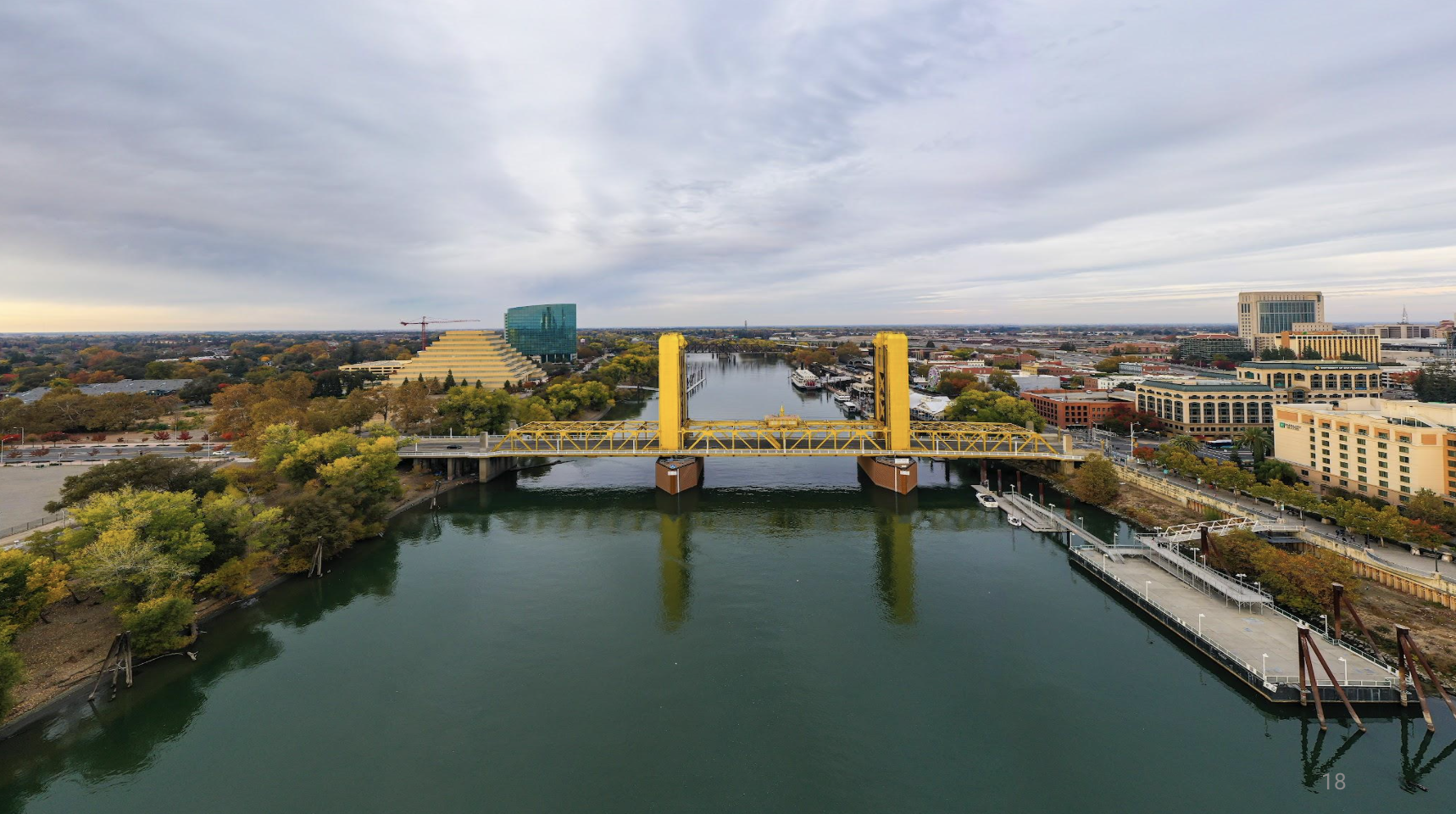
The program expanded to Sacramento in 2023, conducting a regional landscape analysis to outline greater Sacramento region, identify organizations and partnerships that play a critical role in activating the region, and assesses funding opportunities to advance regional resilience priorities.
Over time, regions’ progressed and CRP transitioned to support tangible resilience project implementation.
In the Los Angeles region, CRP supported the creation of the Resilience Blueprint and the Resilience Tool for Baldwin Hills, working closely with the Urban Watershed Conservancy (UWC) that now informs their overall strategic priorities, helping to form new partnerships and build complementary community engagement efforts like the Urban Resilience Advisory Task Force.
In the Sacramento Region, RCC supported the advancement of The Yolo Food Hub to expand food production and distribution channels, improving healthy food access, stabilizing food markets, and increasing employment and job training opportunities. Learn more about this effort and other project implementation efforts through RCC’s California Project Preparation Initiative.
CRP also used regional learnings to inform their approach to bettering a statewide enabling environment.
Statewide, CRP strived to:

Share best practices and accelerate collaboration through the CRP Network
Through convenings, knowledge exchange, development of learning materials, and sharing of best practices, the expanding CRP Network facilitates exchange of best practices.

Foster statewide resilience policy alignment among CRP practitioners
An aligned policy agenda can help inform State policies, philanthropic efforts, and other resilience efforts, and aims to reflect regional priorities and on-the-ground experiences.

Engage statewide philanthropies to catalyze funding for CRP projects and build capacity of CRP partners
By cultivating relationships with philanthropies statewide, mapping CRP projects and regions against funder priority areas, and convening funders, CRP activates new funding opportunities for priority projects and partners.
Regional learnings, including some documented in a series of resilience case studies in Ventura, Oceanside, and Paradise, elevated best practices. The program facilitated statewide dialogues around climate investments, centered equity at every engagement, and cataloged lessons to lay the groundwork for expansion to new regions across the State. Through Climate Crossroads: California’s Readiness to Act on Climate Resilience, CRP provided robust recommendations to inform the State’s grant programs in how to foster more equitable and resilient communities across California.
CRP’s deep work in greater Los Angeles, greater San Diego, greater Sacramento, and the Central Coasts, ultimately unearthed funding and implementation challenges that underscored the need in California to catalyze philanthropic funding, in concert with public resources, to better advance action. Thus, CRP created the foundation for building the next phase of RCC’s work — the California Resilience Implementation Accelerator.
Impact



Advisory Board
As CRP launched, RCC identified leading non-profit and other organizations across the state of California who share a common resilience agenda in order to inform the program and grant-funded initiatives on an on-going basis. Over time, the CRP Advisory Board has advised on numerous projects across regions, supported key partnerships, and provided a formal connection to the all statewide policymaking agencies so that the activities of the partnership can inform state policy. As CRP evolved and the Accelerator launched, RCC continued to engage the CRP advisory board to advise and support on-going activities in California.
CRP Advisory Board members currently include:
Bernadette Austin, CEO, CivicWell
Louise Bedsworth, Executive Director, Center for Law, Energy, & the Environment, Berkeley Law
Darbi Berry, Director, The San Diego Regional Climate Collaborative (Chair)
Erin Coutts, Los Angeles Regional Collaborative for Climate Action and Sustainability (LARC), UCLA Institute of the Environment and Sustainability
Abby Edwards, Senior Deputy Director, Governor's Office of Land Use and Climate Innovation
Jessica Hitt, Associate Director, ClimateWorks Foundation
Nuin-Tara Key, Executive Director of Programs, California Forward
Robert Miyashiro, Program Officer, International Programs, the Conrad N. Hilton Foundation (Ex-Officio)
Kiara Reed, Executive Director, Civic Thread
Jonathan Parfrey, Executive Director, Climate Resolve
Past CRP Advisory Board members include:
Dolores Barajas, Regional Resilience Grant Program Manager, Governor's Office of Land Use and Climate Innovation
Sona Mohnot, Director for Climate Equity, Greenlining Institute