
Resilience Building in Action
Holding the Line: Oceanside’s Community-Led Blueprint for Coastal Resilience
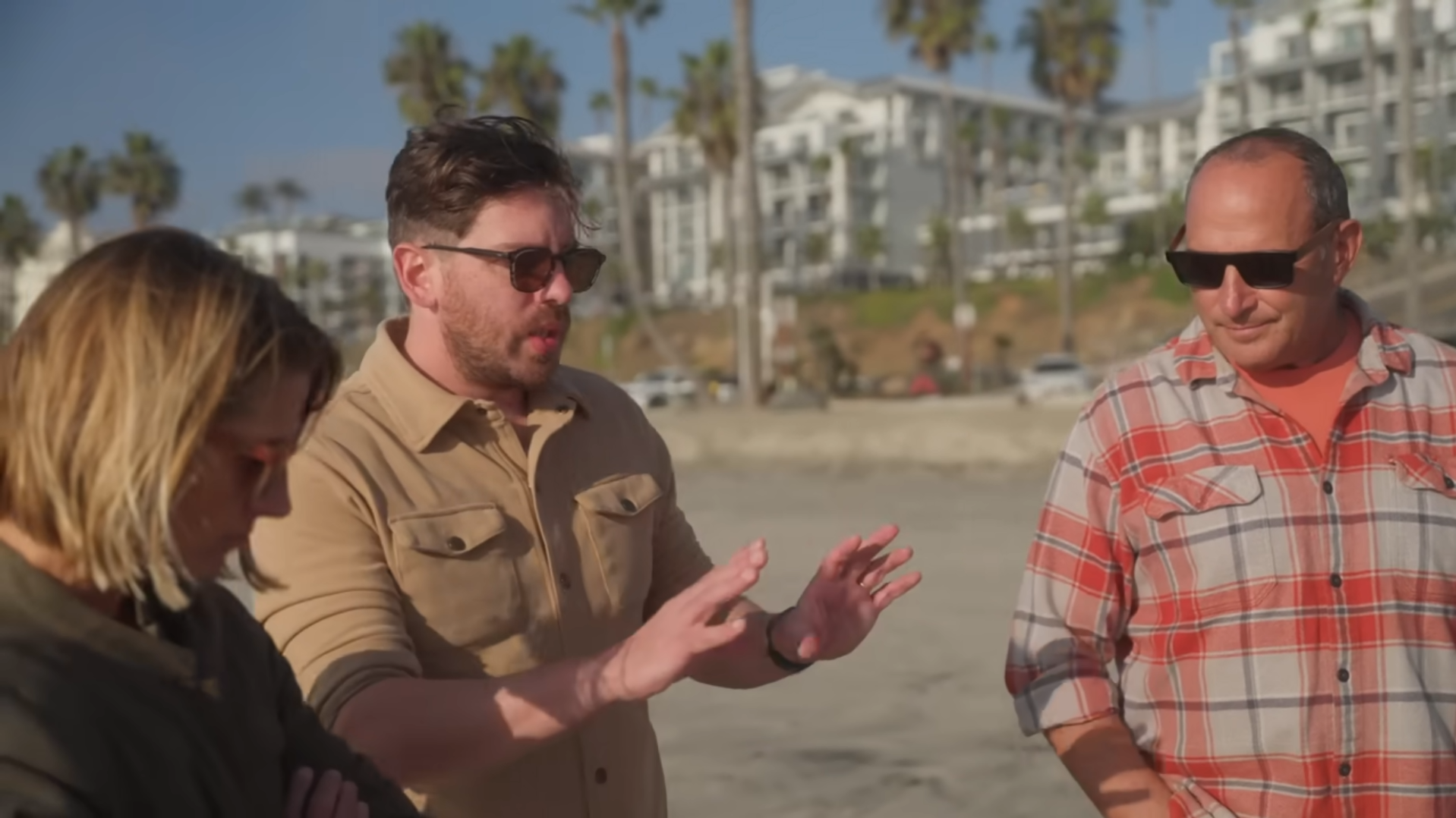
Oceanside’s beaches are central to the city’s identity and economy, yet decades of coastal erosion — accelerated by sea-level rise and increasingly intense winter storms — have left entire stretches of shoreline disappearing during high tide. The impacts reach far beyond recreation: sand loss and beach reduction threatens local businesses, public access, cultural gathering spaces, and critical infrastructure. In 2022, Oceanside recognized that emergency sand placement was no longer enough and took an innovative and inclusive approach to building an adaptive, resilient, community co-designed pilot – RE:BEACH – to preserve its coastline for future generations.
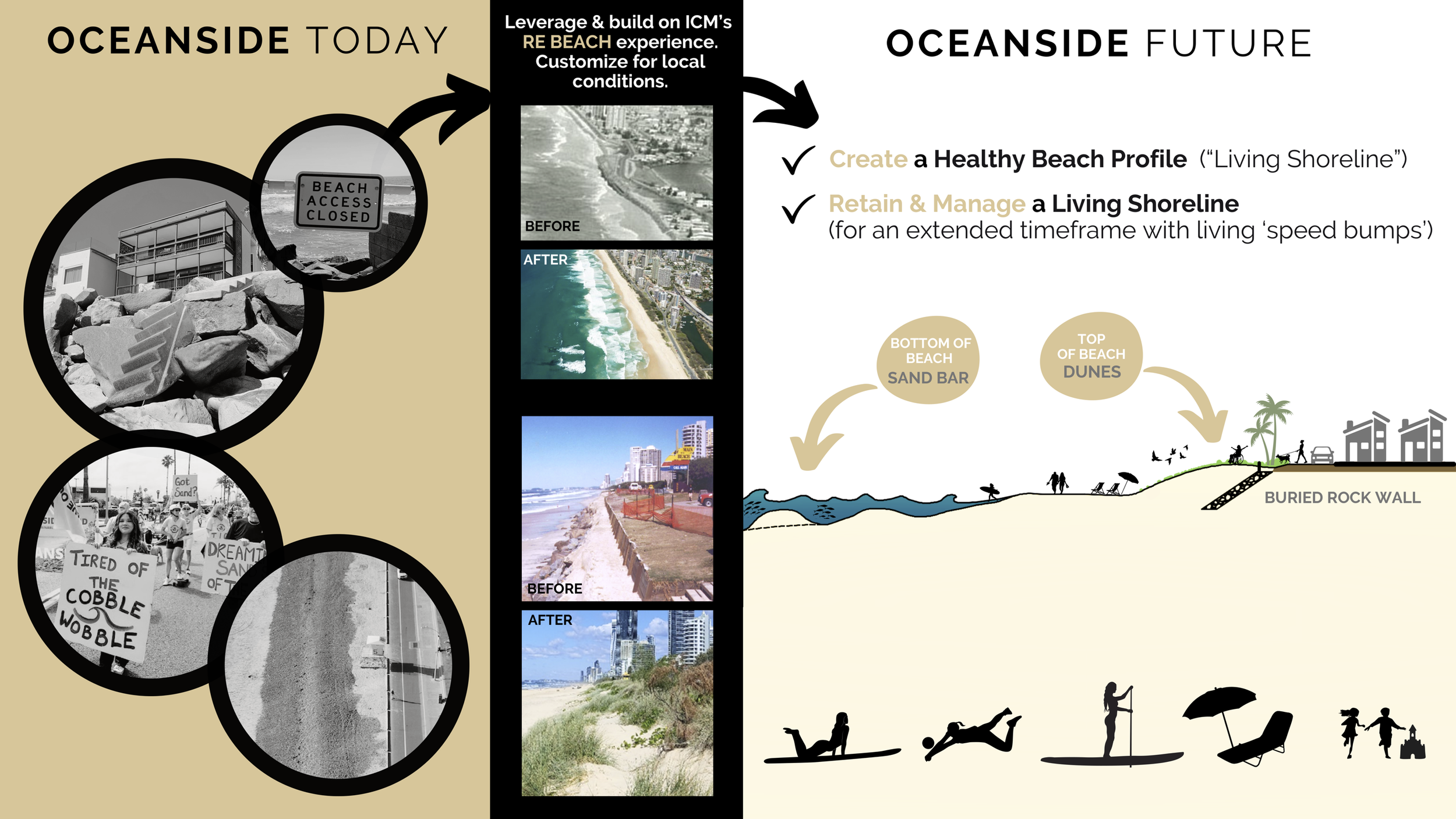
An excerpt from ICM’s design brief detailing the Living Speedbumps concept, a nature-based strategy for stabilizing Oceanside’s shoreline.
In January 2024, Australian firm ICM recommended the Living Speed Bumps concept to Oceanside’s City Council. The hybrid design combines two engineered headlands and an offshore artificial reef to slow erosive forces and naturally stabilize sand — an approach proven on Australia’s Gold Coast but adapted for Oceanside’s coastline. Following the Council’s approval, RCC has continued partnering with the City and project implementer, a local engineering firm GHD, as the project advances into environmental review, permitting, and detailed engineering, including extensive modeling, biological assessments, surf analysis, and iterative community engagement.
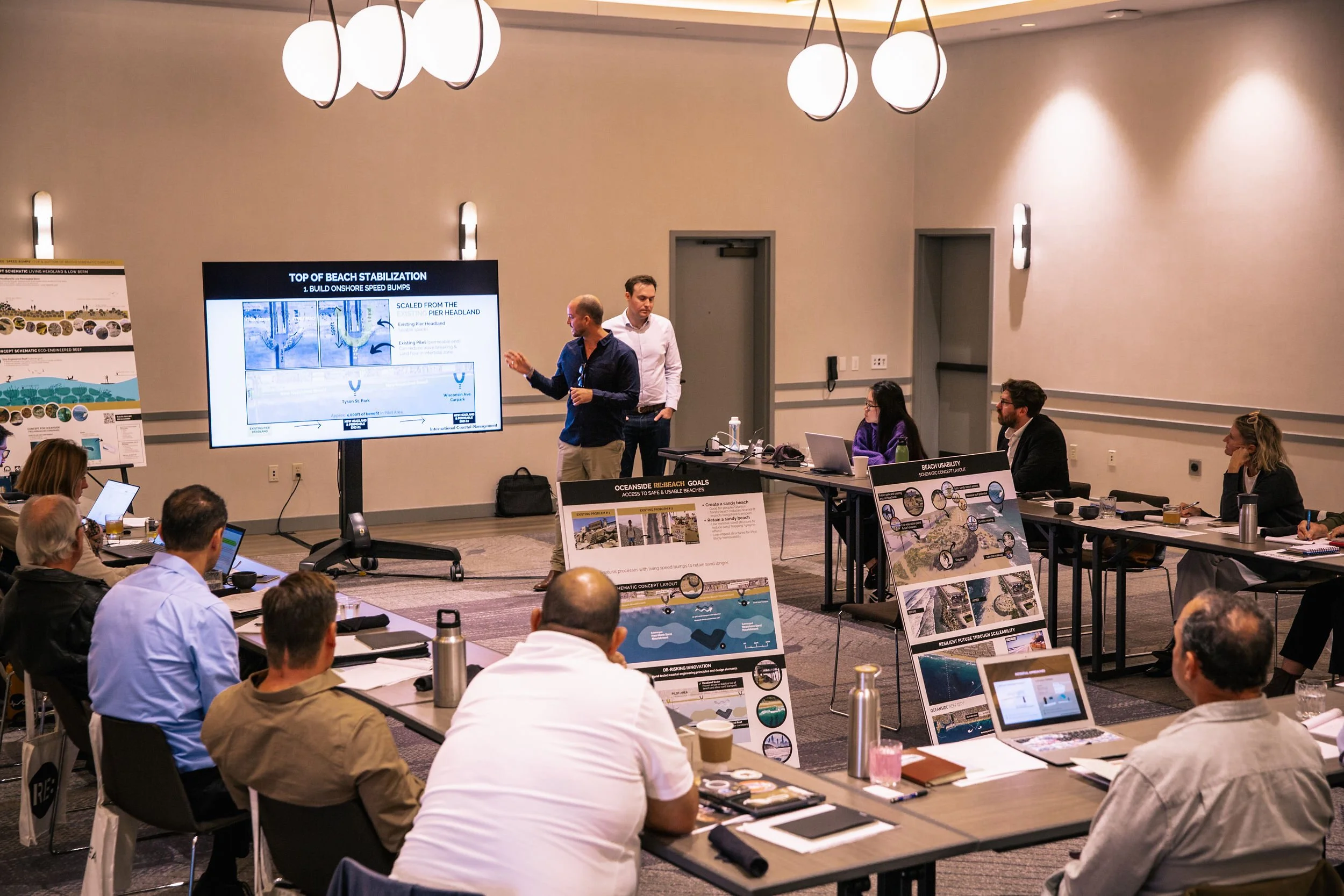
ICM presenting the Living Speedbumps concept to Oceanside City Council.
To make that transition possible, the City of Oceanside partnered with Resilient Cities Catalyst (RCC) to design and facilitate the RE:BEACH pilot — an international design competition to identify innovative global sand retention solutions that can be tailored to the city's unique, local coastal conditions. RCC structured the competition, convened global coastal engineering experts, worked with a jury of local stakeholders and residents to evaluate the proposal, and supported the City in selecting a pilot approach grounded in feasibility, environmental stewardship, and community values. Early and deep engagement from a Jury and Advisory Panel of local, state, and national experts ensured long-term investment and buy-in once a final approach was identified.
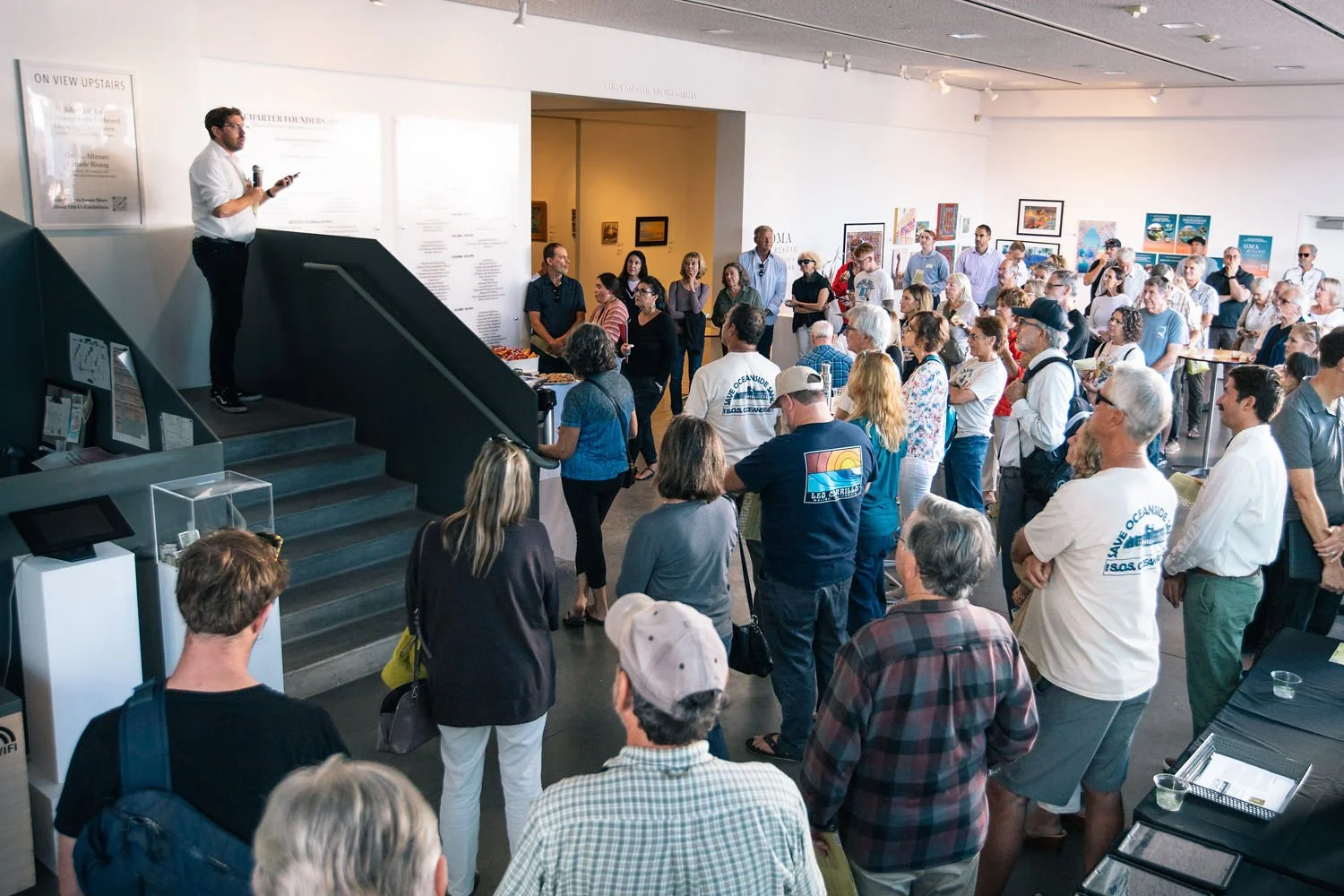
Community members, designers, and local partners participating in a public workshop.
On November 20, 2024, Oceanside’s City Council unanimously approved the recommended pilot location at Tyson Street Park and Wisconsin Avenue, allowing the project to move into its next phase. The pilot will test how artificial reefs and headlands designed with nature-based components can restore and sustain beach sand, protect infrastructure, and preserve public access even as climate pressures intensify. As Oceanside prepares for this next stage, the RE:BEACH process has already drawn global attention: BBC StoryWorks and C40 Cities documented this process with funding from Innovaciones Alumbra, releasing a mini documentary-style film in June 2025 that highlighted Oceanside as a model for community-led coastal resilience.
The RE:BEACH pilot is pioneering a replicable approach for coastal cities facing erosion and sea-level rise. By blending global innovation, local leadership, environmental science, and inclusive public engagement, RCC is supporting the City of Oceanside in charting a long-term, climate-ready pathway for vulnerable beaches across California and beyond.