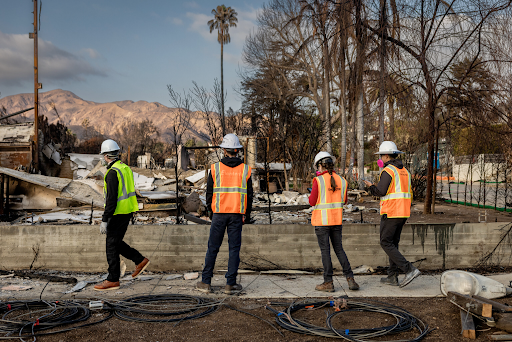
Los Angeles Resilient Recovery
For seven months, from April to November 2025, Climate Resolve and Resilient Cities Catalyst conscientiously and equitably immersed themselves in the recovery landscape, learning from the full spectrum of those directly affected or involved in the response, rigorously investigating strategies that might aid the recovery from the Eaton and Palisades fires, and examining wide-ranging interventions that could contribute to reducing or eliminating impacts of future fire events in the Los Angeles area.
Six critical themes emerged from this process that can provide a framework for strategic investment that complements government action while filling gaps that government cannot address quickly or flexibly enough.
Community engagement and equity
Infrastructure and utilities
Housing and affordability
Building codes and fire safety
Permitting and approval processes
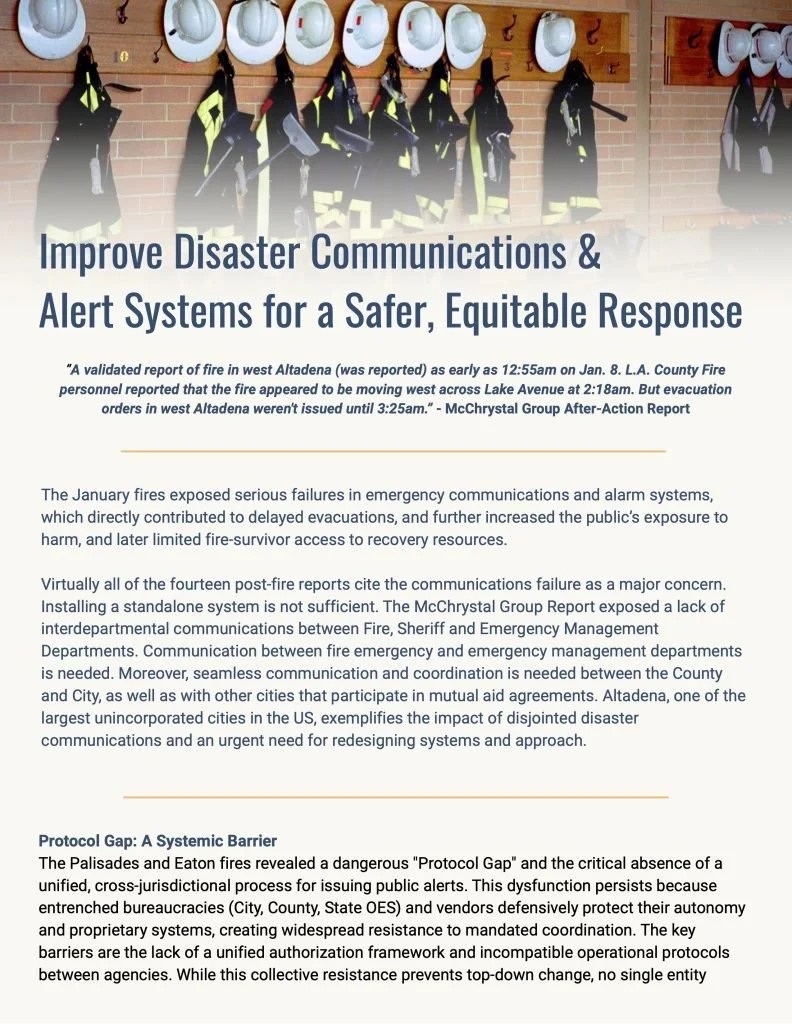
Emergency management
Communities are already rebuilding, and families are already returning to Altadena and the Pacific Palisades. The question is now whether recovery will deepen inequity, or whether the subsequent fire will reveal the same systemic failures. Strategic research-backed investment can help ensure that recovery serves all residents and that the lessons of January 2025 wildfires inform future adaptation to the climate reality California now faces.
Authentic Community Engagement in the Recovery Process
Program lead, Climate Resolve had already been embedded in these communities, but this approach post-disaster allowed for better cataloging the comprehensive quantitative and qualitative landscape analysis of actors, impacts, and dynamics following the Eaton and Palisades fires, in the fire-effected communities and across Los Angeles. This approach was taken to ensure any recommendations that arose from this effort would accurately and appropriately reflect the lived experience and expertise of the plethora of actors already on the ground. Both Climate Resolve and RCC spent months in the community, learning from those fire survivors and critical partners and actors who have been deeply committed to rebuilding Los Angeles to the highest, best standard. This rigorous approach better informed perspectives the team built to strengthen their recommendations. To learn more about the approaches to community engagement, access the full report here.
Mapping Priorities and Influence of Key Actors
In the aftermath of the Eaton and Palisades fires, the sheer volume of “interested parties” proved overwhelming. Examination of the complex landscape, identified champions and detractors of resilience measures, organizations with and without direct power over the rebuilding process, and those who remain unconvinced, neutral, or opposed to climate-resilient rebuilding. This analysis helped identify key stakeholders highlighted recovery areas that necessitate active engagement and collaboration to secure commitments and expedite action.
Plan Recommendations & Alignment
The Plan Alignment tool synthesizes fourteen key reports published after the 2025 Southern California Wildfires and identifies six overlapping themes that consistently surface across the documents to better guide strategy development for philanthropies and other actors. These themes include prioritizing inclusive, equitable community engagement; resilient infrastructure and building standards; housing affordability and displacement prevention; strengthening emergency response systems; and streamlining permitting processes. Read the full analysis here.
Global Case Studies: Critical Lessons for Los Angeles
RCC led an in-depth analysis of various disaster case studies globally to surface practices with proven success and context specific takeaways for resilient recovery in Los Angeles. Case studies across various disaster types detail a disaster, its damages, the intervention strategies and stakeholders involved, and the outcomes and outputs, highlighting with key applications relevant to Los Angeles wildfire recovery. Several key overarching lessons emerged:
Seize the Opportunity to Make Lasting Change: Leverage a post-disaster moment to think bigger and ensure the establishment of permanent, community-led resilient solutions to prevent future impacts, mandating process-driven technical standards are integrated into rebuilding and recovery.
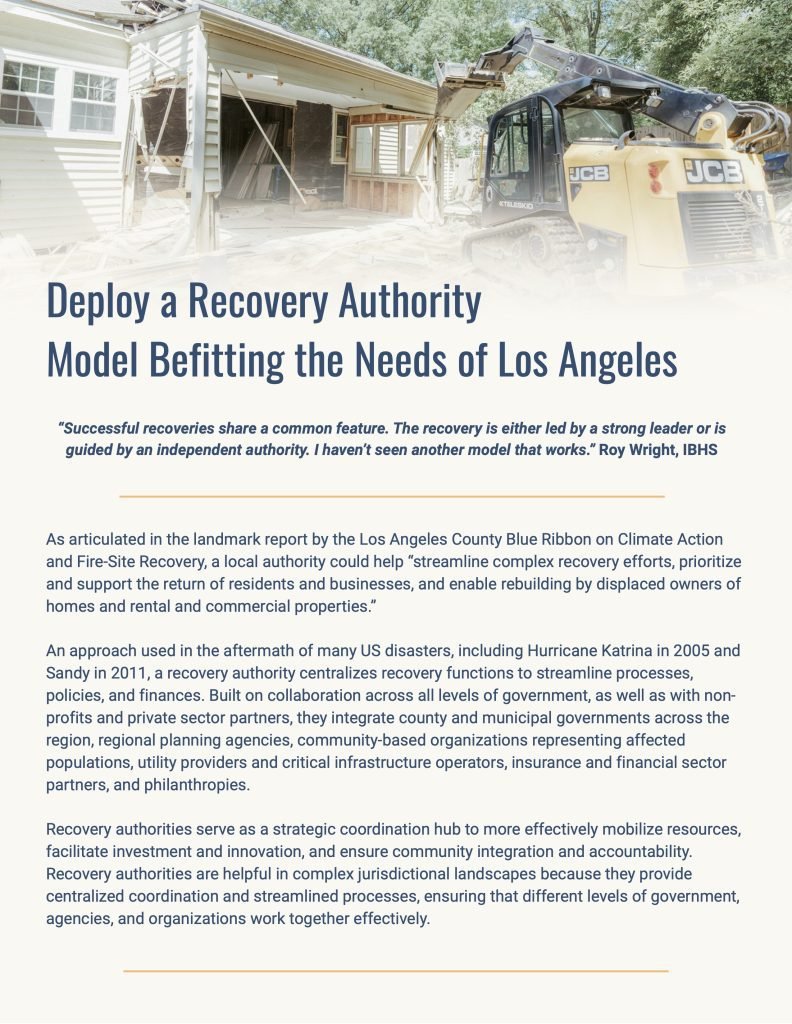
Create Governance & Financing Structures for Recovery and Resilience: Establish a unified governance structure, like recovery authority, to effectively coordinate immediate response and long-term recovery, to reduce bureaucratic delays, streamline aid, and overcome complex political dynamics, ensuring sustained revenue pathways and innovative insurance reforms can support the process.
Prioritize a Community-Centered Recovery Approach: Recognize that disaster as a shared burden, and mental health and survivor wellbeing are central in the recovery process. To help create better community cohesion and streamlined recovery, conduct community-led visioning and recovery planning and develop workforce training (homeowner or broader community wide) to create skilled labor jobs and sustained economic livelihoods.
Recommendations
The four proposed strategies particularly represent where philanthropy can have the biggest impact to improve people's lives today, while also ensuring a more resilient future for the region. Taken as a whole, this report can be used as a kit to guide philanthropic investment in a more resilient recovery for Los Angeles. These priority recommendations are presented in a prospectus format to purposefully engage with broader philanthropic audiences in an impactful way – to facilitate quicker, targeted action by the philanthropic sector. In order to de-risk philanthropic funding and maximize its impact, the identified and vetted opportunities ensure all recommendations have a pathway for support, community demand and public backing, and a high probability of impact to build resilience to future events.