Building on work in Santa Barbara and Oceanside, Resilient Cities Catalyst launched the California Coastal Accelerator in September 2025 to drive coastal leadership and resilience project implementation in five coastal communities across the state. The initiative supports leaders doing visionary work to advance resilience in their communities.
Overview
The Coastal Accelerator initiative takes a two pronged approach to supporting communities — providing funding and technical support to advance priority projects within each community and bring together the local leaders implementing the projects in a cohort for peer exchange.
Each participating community will receive support tailored to its unique needs and local context - meaning no two cohort members will have the same experience. The Coastal Accelerator is designed to be adaptive, with programming that evolves in response to stakeholder input and on-the-ground realities. This approach ensures that each community maximizes the impact of the partnership while contributing to a broader, collaborative model that spreads best practices for coastal resilience across California.
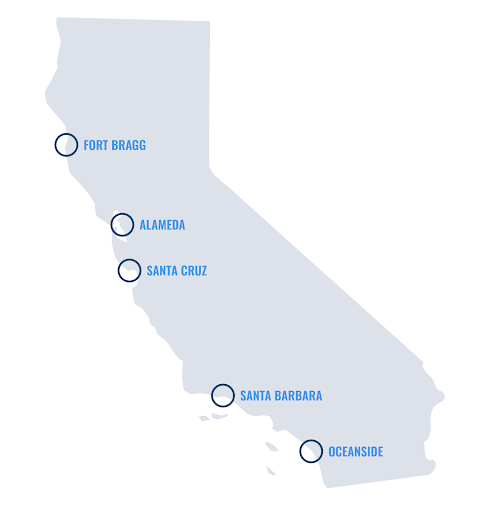
[INSERT INFOGRAPHIC]
The priorities of each coastal community represent different, yet complementary action to push the envelope on building climate resilience in California. Each coastal community will receive tailored resources supporting project development, permitting, partnership-building, and implementation funding strategies. Technical assistance will vary depending on particular project needs and lifecycles, and will be jointly determined between program partners and cohort members, but could include support such as conceptual project design, community engagement strategies, grant writing support, necessary or supplemental technical studies and research, permitting and environmental compliance strategies, funding options, and consultation on governance options and models.
By advancing place-based solutions and fostering statewide collaboration, the Coastal Accelerator seeks to establish a replicable model for accelerating climate resilience—demonstrating how California can lead in safeguarding and increasing access to its coast while setting a global example for adaptation in action.
Through cohort members’ mutual support and collaboration, the Cohort will unearth common barriers to implementation across California coastal communities and highlight necessary policy and process changes to facilitate action.

Coastal Communities
-
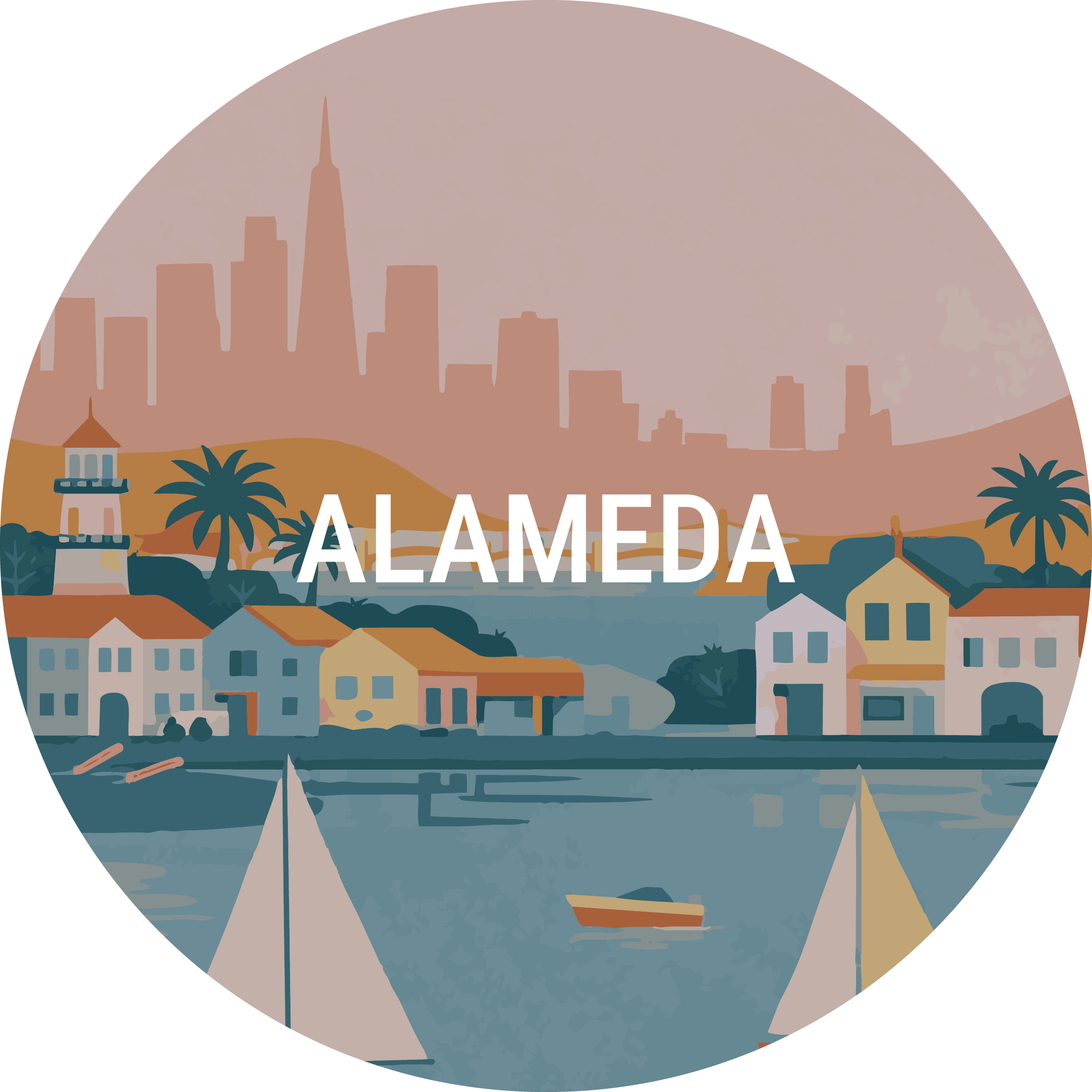
The City of Alameda in the San Francisco Bay, consists of Alameda Island, Bay Farm Island and Coast Guard Island. Their climate challenges are entangled with the larger Bay Area region, requiring significant collaboration to successfully plan for sea level rise adaptation. Since 2021, Alameda has been leading the Oakland Alameda Adaptation Committee to identify regional priorities and aligned local actions. They are currently working to advance two priority projects that address local challenges while still aligning with regional priorities. The Estuary Adaptation Project addresses the complex ecosystem of coastal and inland water management and will integrate levees, seawalls, and redevelopment at higher elevations, as well as green and grey detention basins to protect ingress/egress route of the Posey/Webster Tubes and improve Alameda’s northside stormwater drainage for today’s volumes with added capacity as precipitation increases. The Bay Farm Island Adaptation Project seeks to address near-term risks along the northern shoreline as a first step in a long-term adaptation plan for the whole island, and includes a levee to reduce coastal flooding, Bay Trail enhancements, nature-based solutions to reduce erosion and to improve marshes and beach habitat, tide gate and pump station replacements, and storm drain modifications. Alameda is also advancing planning for a priority project along the Alameda Beaches, including a state park, 3-mile swimming beach and bird sanctuary providing critical habitat for protected bird species.
-
Fort Bragg, on Mendocino Coast in Northern California, is known for its historical Noyo Harbor and significant fishing industry that has faced decline due to environmental challenges, regulatory changes, and economic pressures. Fort Bragg’s working waterfront remains an integral part of local culture, and they have sought to reinvitalize the community through building a “blue economy” with a focus on infrastructure improvements and community-led actions to support the legacy of fishing in the area. In 2022, the City of Fort Bragg, Noyo Harbor District, Mendocino Community College, Noyo Center for Marine Science, and West Center for Business Development formed the Noyo Ocean Collective to better organize and plan. With support from California Sea Grant and the California Coastal Commission, Fort Bragg developed the Noyo Harbor Blue Economy Visioning, Resiliency and Implementation (BEVRI) Plan, to create a roadmap for coastal resiliency within the harbor – balancing environmental stewardship with economic vitality.
-
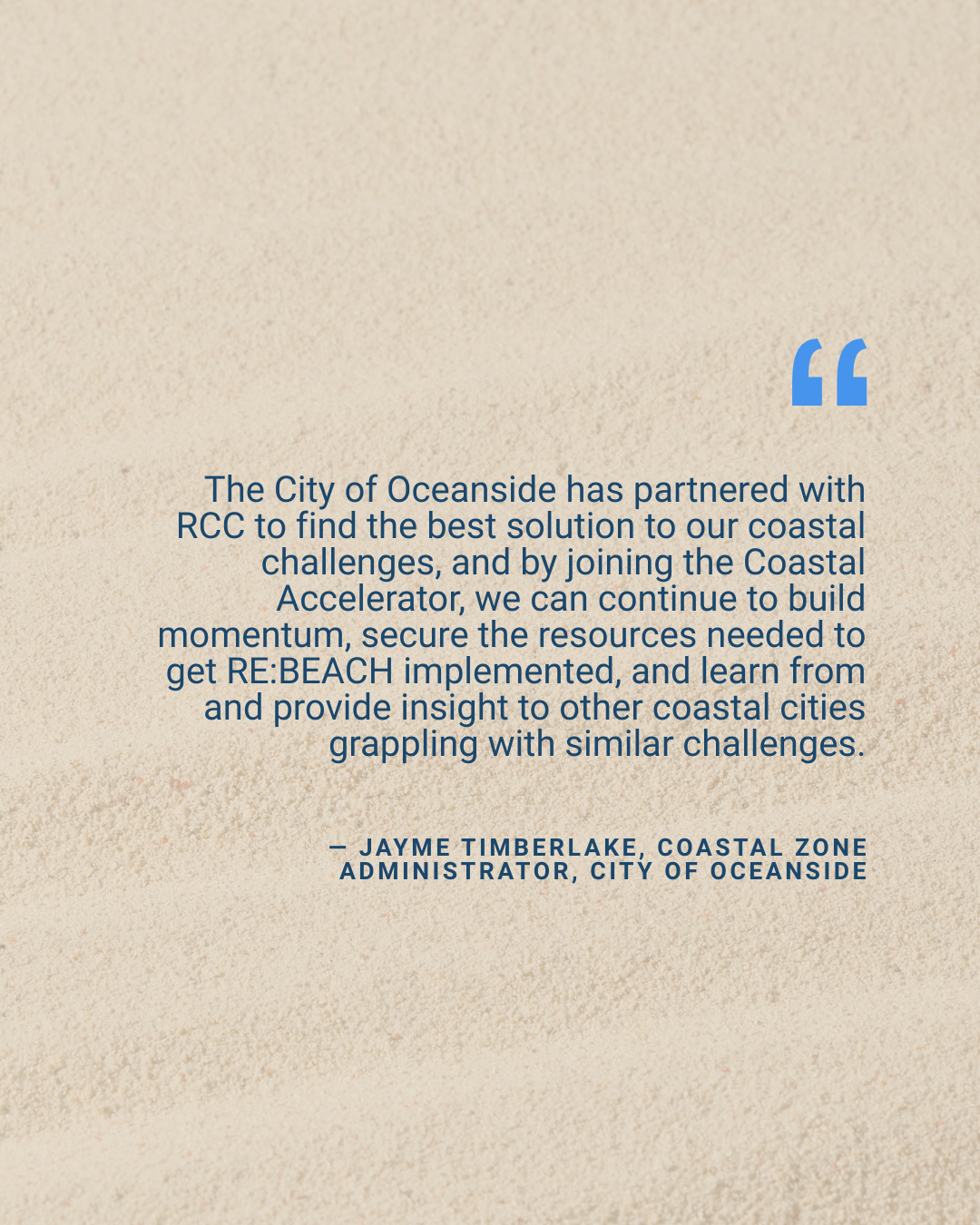
Oceanside’s shoreline is rapidly eroding, a process that has accelerated over the past 10 years. To manage this challenge and respond to public demand for more innovative approaches to coastal resilience building than traditional hard infrastructure, the City of Oceanside partnered with Resilient Cities Catalyst and GHD USA to launch RE:BEACH. They hosted an international design competition to bring ideas from experts across the world to Oceanside’s residents in order to identify a community-driven, viable pilot project for coastal resilience and sand retention. The winning project, the Living Speedbumps, designed by Australian design firm ICM,, includes an artificial reef and headlands, combined with sand nourishment, that will aim to stabilize sand retention and slow down nearshore erosive forces. RE:BEACH pilot has since received support from California’s Coastal Commission to fund monitoring associated long-term planning and management, and was selected as a representative regional pilot project by San Diego Association of Regional Government (SANDAG) to be explored through the Regional Beach Sand Project (RBSP III).
-
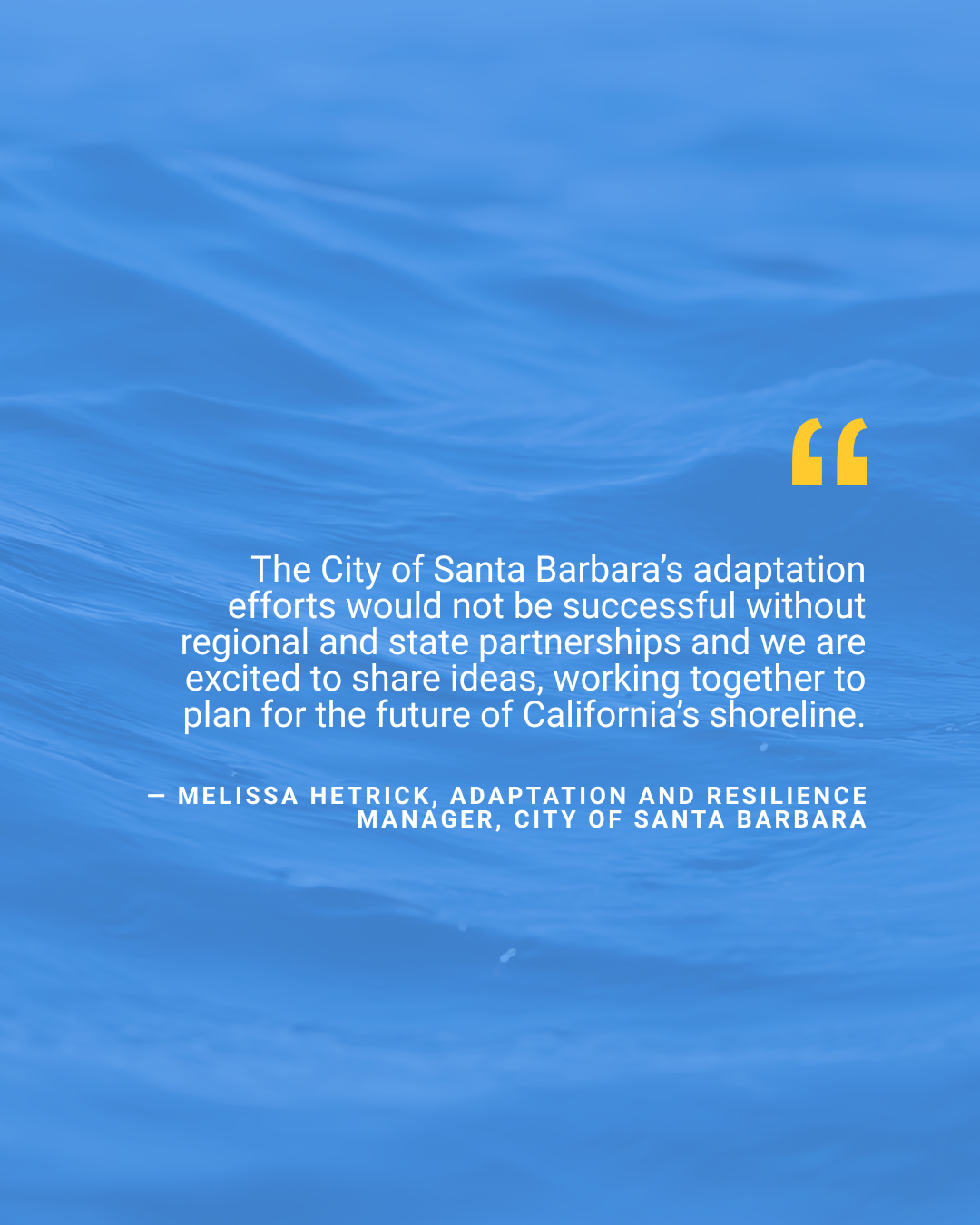
The City of Santa Barbara’s extensive public Waterfront, working Harbor, beautiful beaches, creek corridors, and proximity to Los Padres National Forest make the region beloved for its recreational opportunities and natural resources. What makes Santa Barbara beautiful, though, also makes it highly vulnerable to flooding, wildfires, and wave impacts. The City has experienced several back-to-back years of flooding downtown, erosion of its harbor infrastructure, and storm surge on its Waterfront. The City has created an Adaptation and Resilience Division whose mission is to prepare the community for the impacts of climate change, providing a multifaceted approach to hazard reduction by proactively adapting City infrastructure, monitoring coastal changes, reducing flood and erosion hazards while restoring habitats, increasing building resilience standards, and providing resources to the community. In February, to better address future climate challenges and collaborate with local actors, Santa Barbara began developing a 30-Year Waterfront Adaptation Plan. This effort will create a roadmap to respond to increased storm surges, erosion, and flooding and provide solutions that preserve and enhance recreation, commerce, beach access, habitat, and critical infrastructure for the near-term and future generations.
-
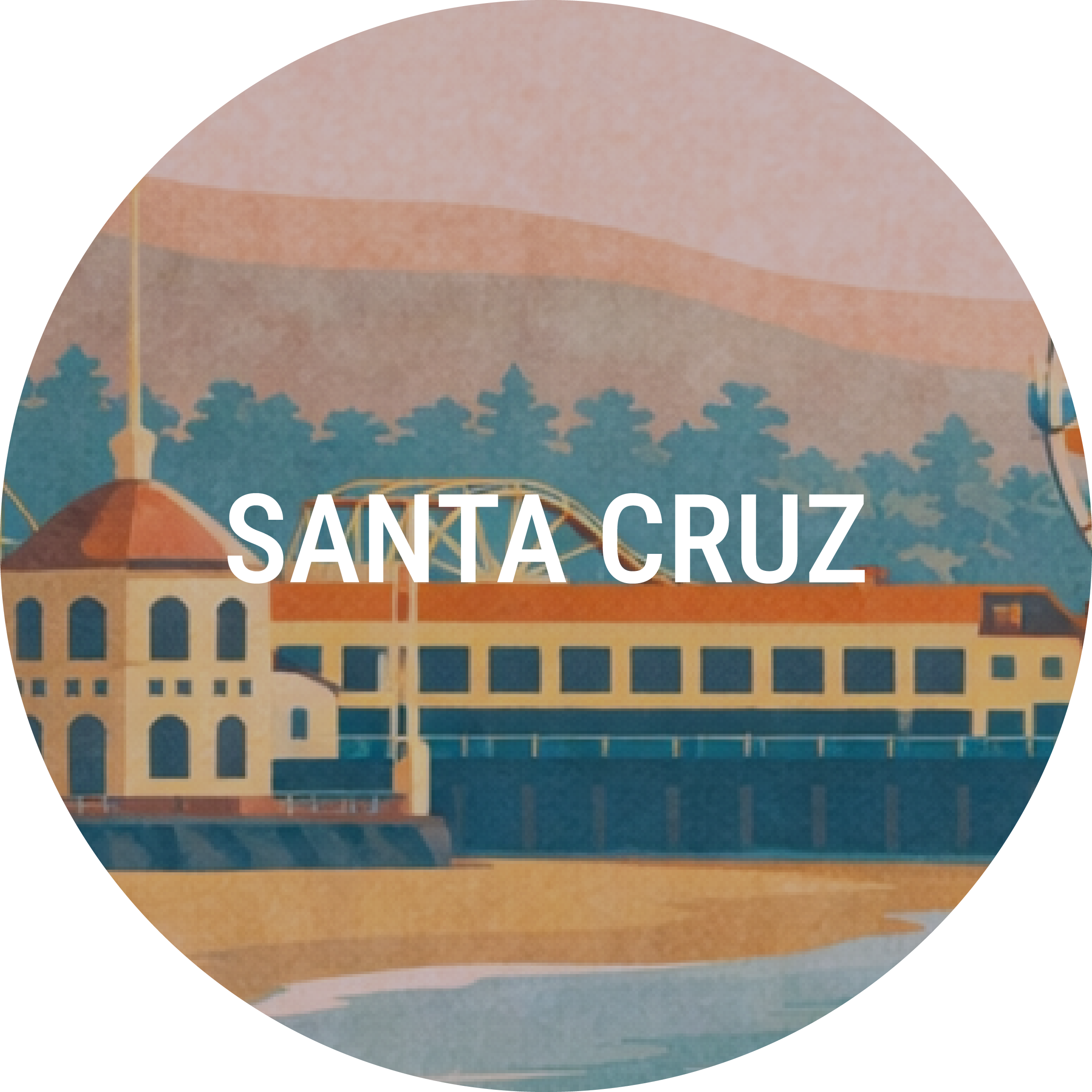
Situated on the northern edge of Monterey Bay on the Central Coast, Santa Cruz is a popular tourist destination due to its beaches, surf culture, and historic landmarks, like the Santa Cruz Wharf and Boardwalk. In 2019, Santa Cruz began developing an innovative adaptation pathways approach to coastal management . The working adaptation pathways decision-making framework uses triggers and thresholds to indicate when investments should be made to address coastal hazards overcoming the timing uncertainties associated with climate change, particularly sea-level rise. This flexible strategy involves selecting a portfolio of initial adaptation actions, monitoring key indicators, and then transitioning to new strategies as specific thresholds for risk are met, allowing the City to help balance long-term environmental protection with the need to safeguard existing infrastructure and community needs. By deploying a more dynamic process, Santa Cruz can avoid locking into expensive, long-term solutions prematurely or too late and continue to advance climate resilience in the face of deep uncertainty.
Local Priorities
XXX
The Cohort
Danielle Meiler
Sarah Million
Jayme Timberlake
Melissa Hetrick
Tiffany Wise-West
Partners
INSERT SCROLLING BANNER WITH ICONS FEATURING ALL QUOTES FROM THIS ARTICLE: https://docs.google.com/document/d/1XPLJahO74iN5RzUZ3ayv4kF7OWkEBkTKORYOliYBBkQ/edit?tab=t.6fgias7zqfm3