
California Coastal Accelerator Cohort Profile

OCEANSIDE
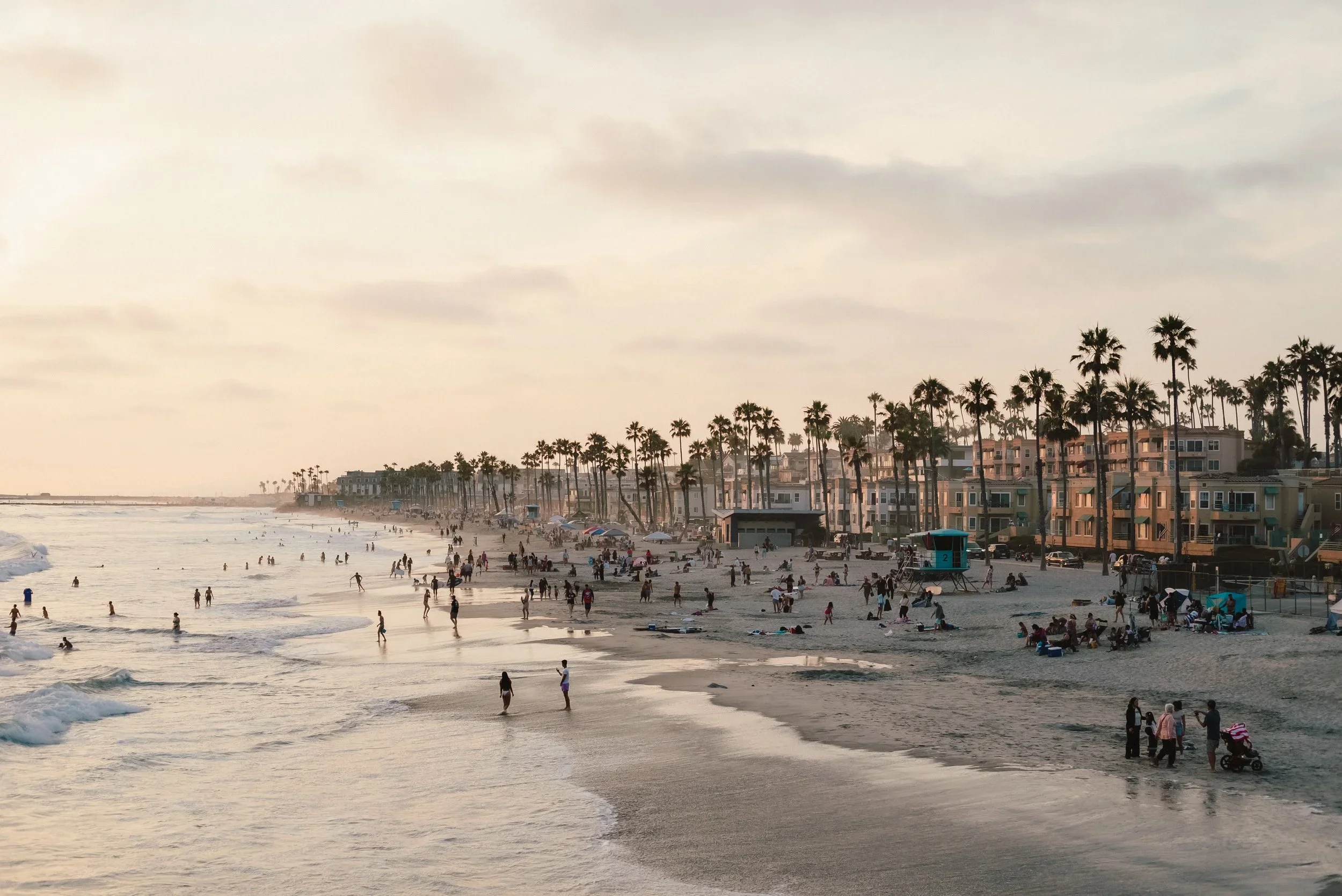
Oceanside, California is a major coastal city in north San Diego County centrally located between San Diego and Los Angeles. Known for its sandy beaches, historic pier, and strong connection to the ocean, Oceanside – with nearly 175,000 residents – is the third-largest city in San Diego County and a regional hub for coastal recreation, tourism, and transportation.
The city has faced challenges with sand retention and beach management for nearly a century due the construction of the Camp Pendleton Boat Basin in 1942 and the Oceanside Small Craft Harbor in 1963, collectively referred to as the Harbor Complex, which disrupted natural sand movement along the coast. Coupled with climate challenges, chronic and accelerated shoreline erosion has resulted in the loss of dry sand beaches and increased wave impacts, prompting strong community advocacy efforts and drawing attention to Oceanside from residents, neighboring communities, and across the state.
With a growing population, tourism economy, and important coastal infrastructure, Oceanside’s response to rising sea levels, chronic beach erosion, and more frequent storm-driven flooding – which threaten homes, businesses, transportation corridors, and natural habitats along the shoreline—has become increasingly urgent. The city must balance the protection of its coastal resources with community development and public access, while adapting to climate change impacts and recognizing that traditional, short-term beach nourishment approaches alone have not provided lasting solutions, to ensure Oceanside remains a safe and thriving coastal community.
-
Oceanside’s pier, public access road to the beach, known as the Strand, multiple park and public recreation spaces near the beach, and adjacent lively downtown corridor make the City a thriving destination for tourists and surfers from near and far. These amenities, however, are located directly within a highly dynamic coastal zone.. As beaches narrow, this infrastructure faces increasing risks from storm-driven flooding, wave overtopping, and other climate-driven coastal hazards.
-
Near-term beach erosion and sand retention threaten Oceanside’s livelihood and infrastructure by eliminating dry sand beaches that provide recreation, ecological function, and natural storm protection. In addition, sea level rise increases the risk of shoreline flooding, especially during high tides and storm events, further compounding erosion-related impacts.
This combination reduces natural storm protection, damages recreation areas, and threatens infrastructure, particularly in the harbor, nearby roads and waterfront development. Stronger and more frequent coastal storms intensify wave impacts contribute to bluff instability and add to property damage along the coast.
In addition, changing ocean conditions—including warmer waters and potential impacts on marine ecosystems—affect fisheries, tourism, and coastal biodiversity as shoreline habitats continue to narrow and degrade.
-
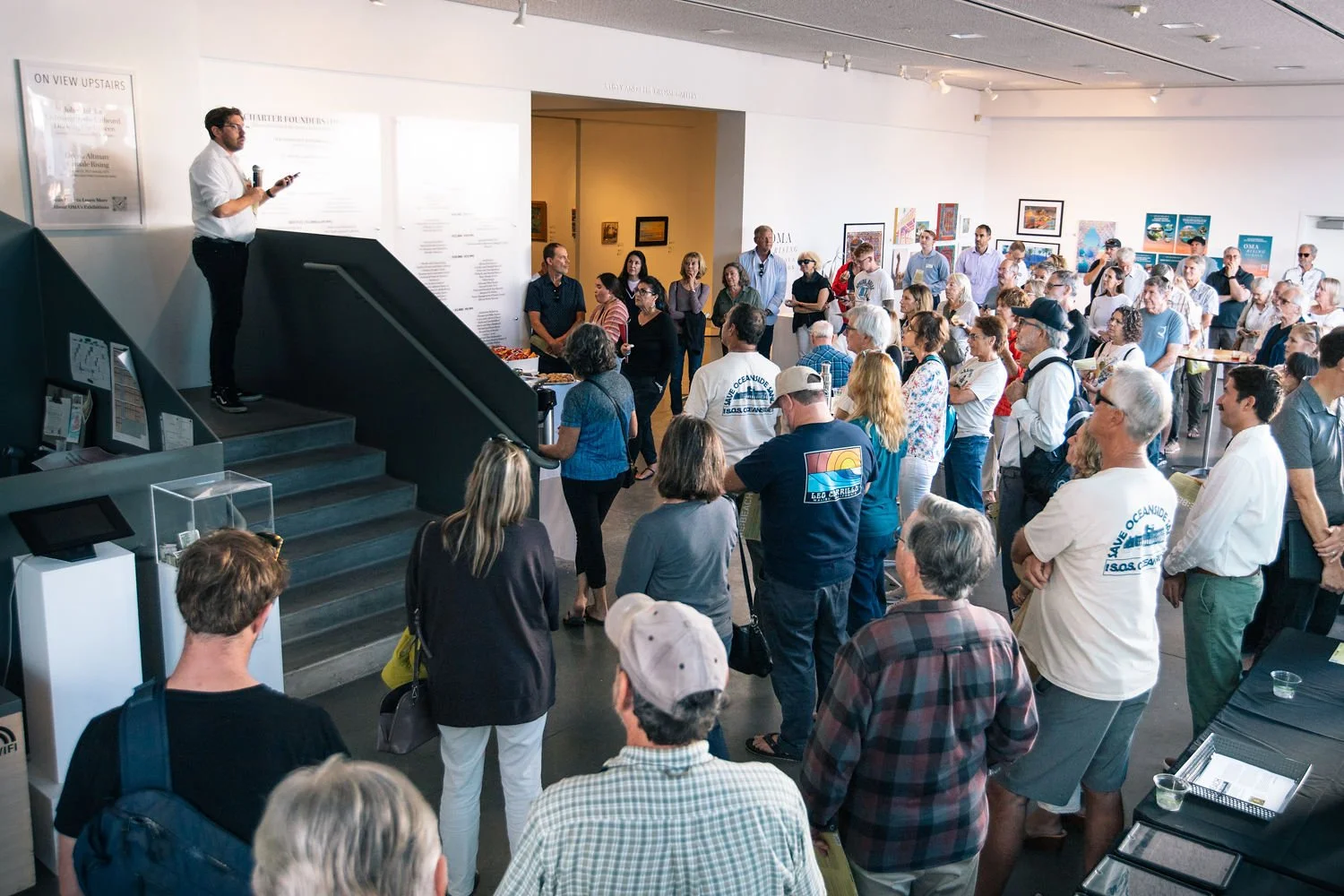
Oceanside has a diverse community, reflecting its role as a large, accessible coastal city with a working harbor, regional transit connections, and a strong local economy. The city also hosts an active surf population and engaged coastal advocates who have been leading the charge in pushing for more durable and effective solutions for Oceanside’s beach restoration and sand retention.
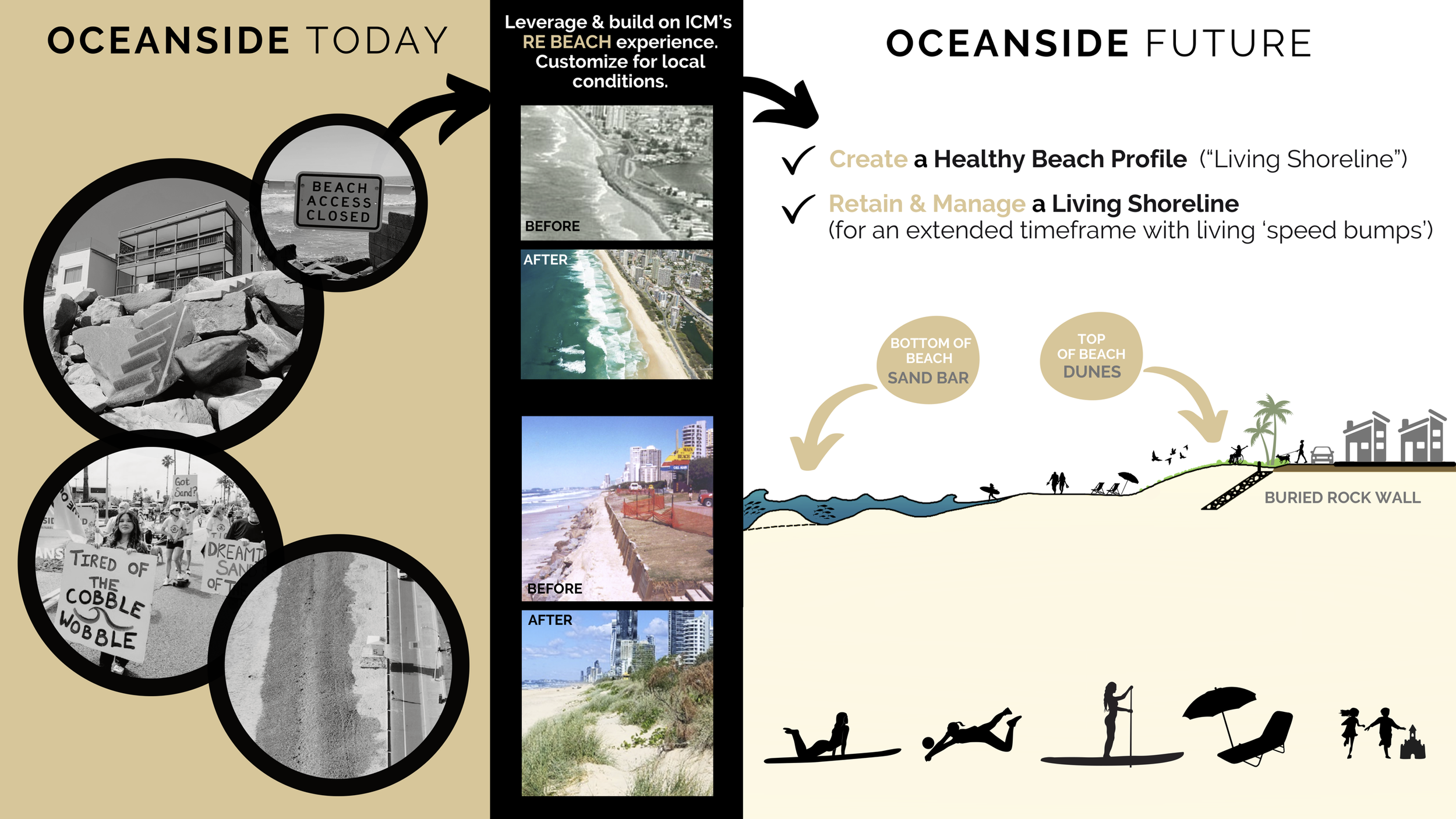
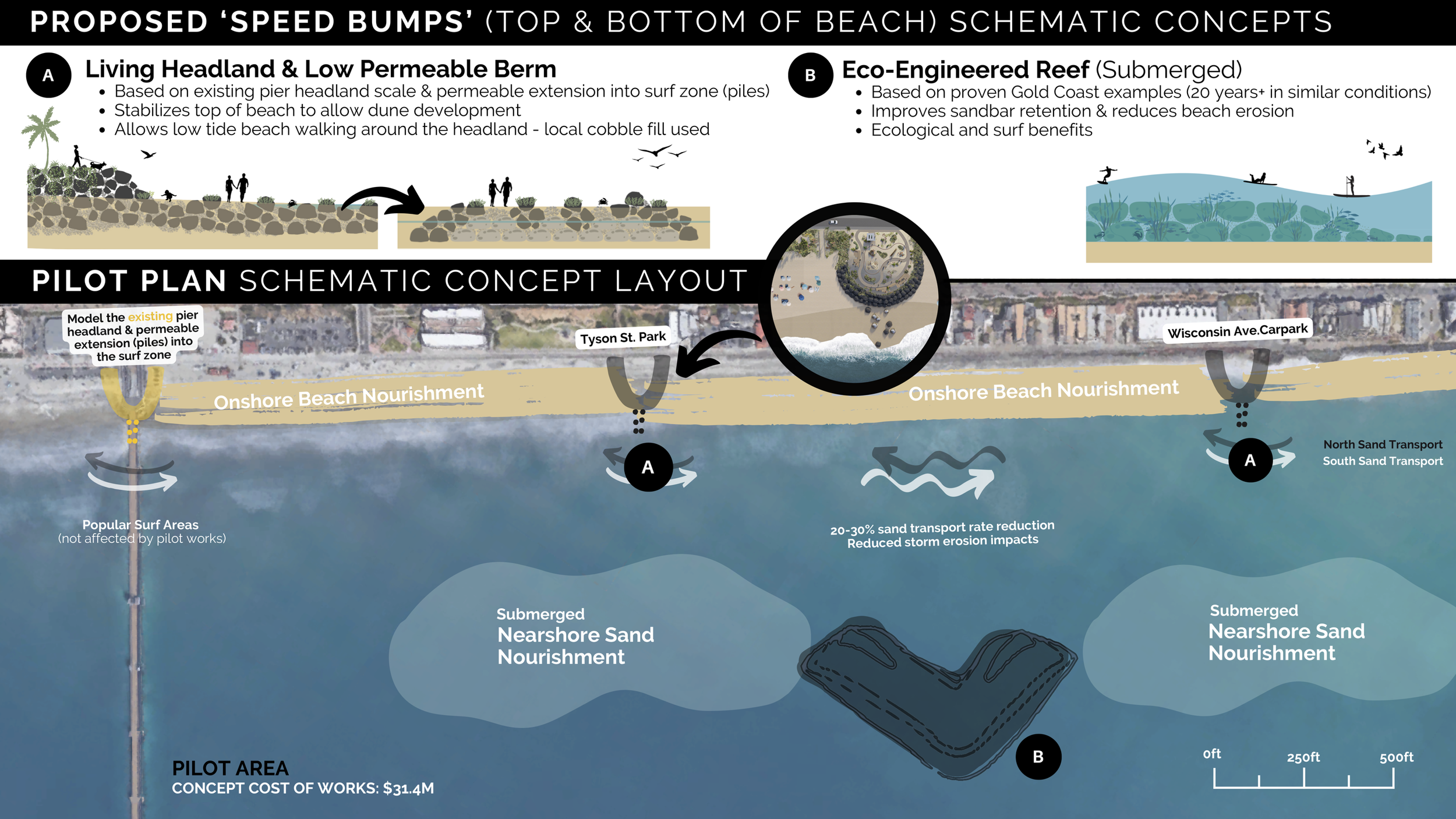
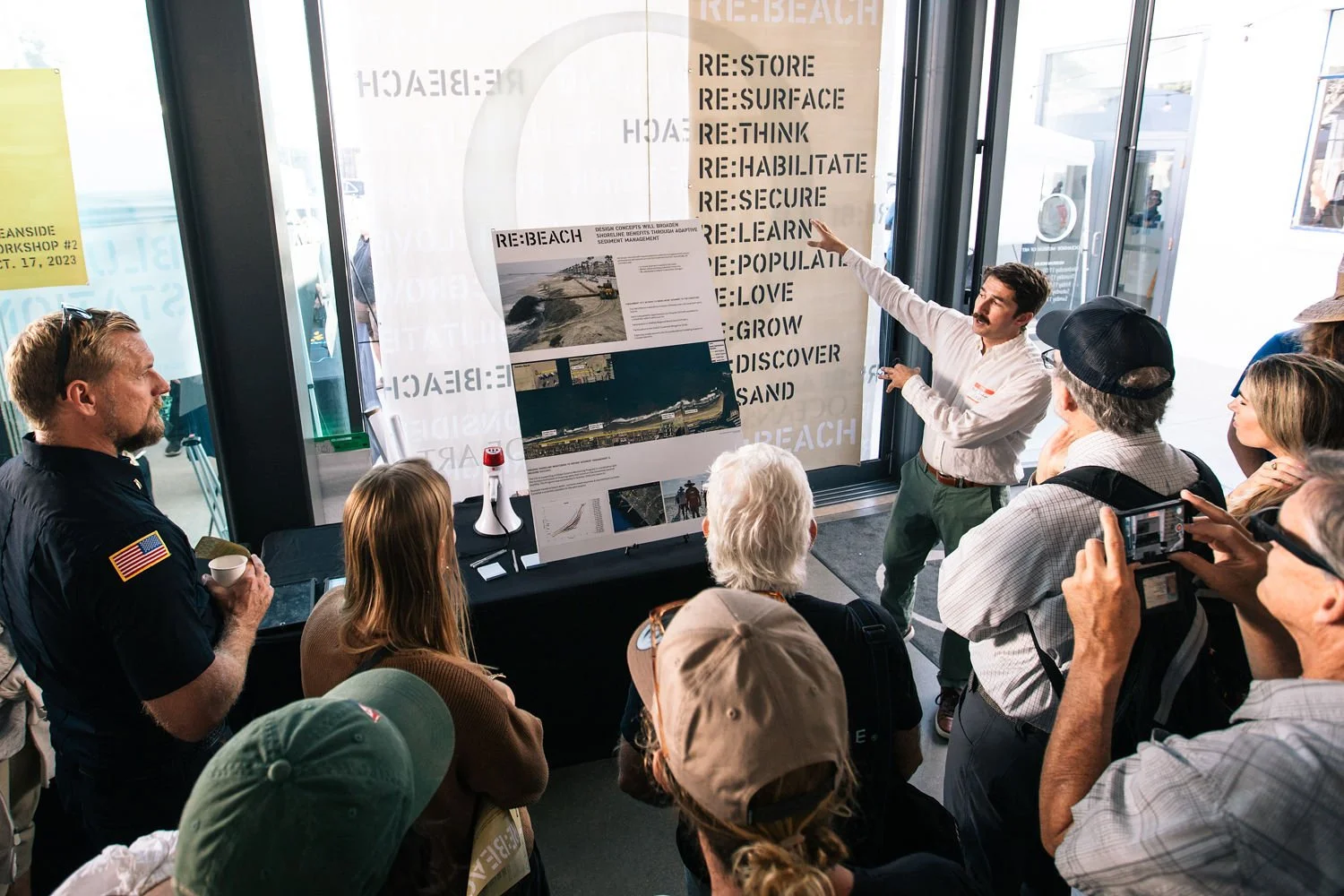
Their work ultimately resulted in the City rethinking its approach to groin development and instead holding an international design competition to bring in more innovative solutions. This process led to the development of “living speed bumps” and an offshore artificial reef designed to better retain sand and manage coastal processes, known as the RE:BEACH pilot project.
-
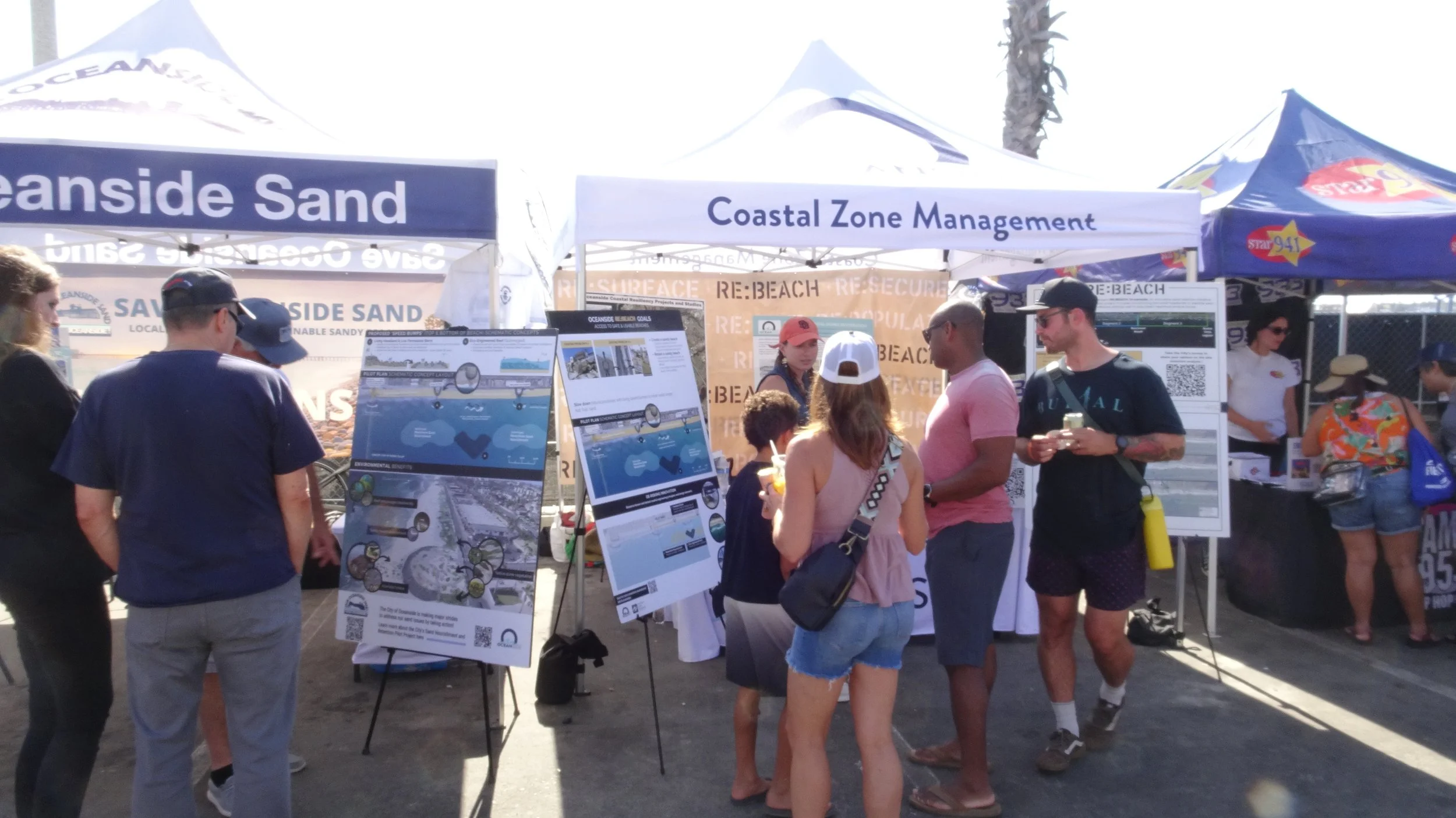
The RE:BEACH Pilot has not only drawn broader interest from neighboring coastal communities who also face similar challenges, but also has sparked optimism from regional and state agencies looking for replicable, scalable solutions for California’s beaches. The pilot approach will allow for more adaptability and increased impacts through robust monitoring and evaluation, informing future coastal resilience efforts, and has already received statewide attention with California’s Coastal Commission awarding the City $1.8m for increased monitoring.
San Diego Association of Governments also designated the pilot their third Regional Beach Sand Pilot (RBSPIII), which augments Oceanside’s capacity with additional fundraising support and technical expertise to increase likelihood of successful implementation.


Leadership Perspective
Jayme Timberlake, Coastal Zone Administrator, City of Oceanside
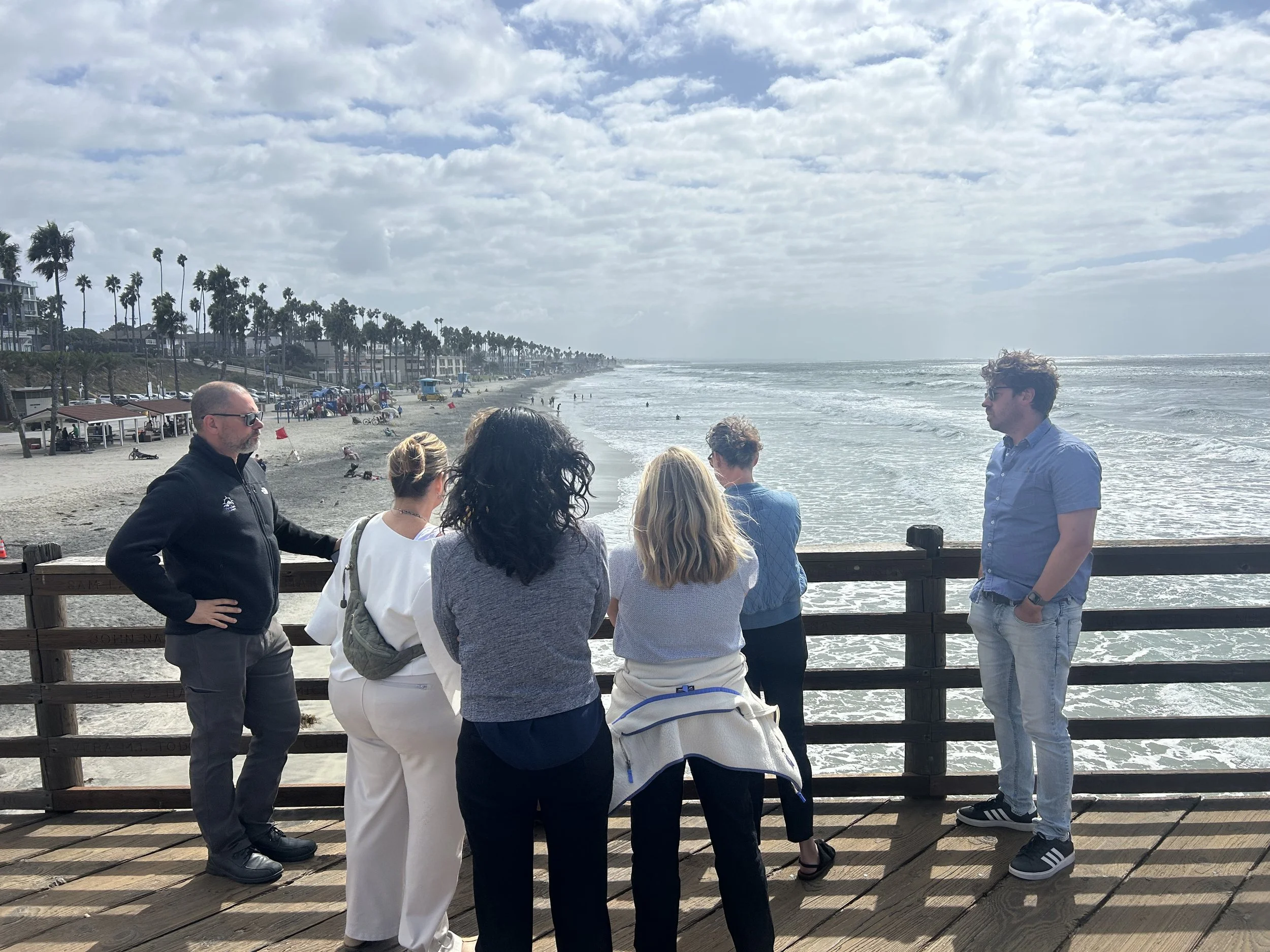
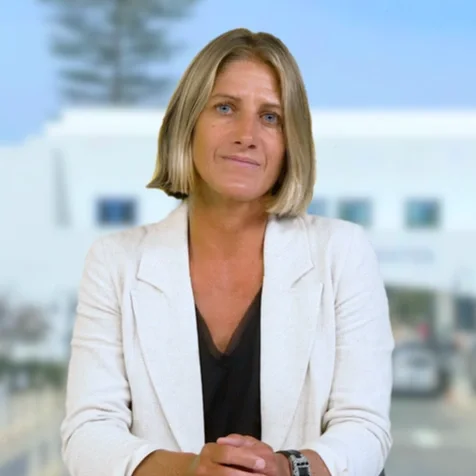
Jayme Timberlake is on the frontlines of climate resilience challenges as the City of Oceanside’s inaugural Coastal Zone Program Administrator. Bringing her experience from the City of Encinitas, where she ran the shoreline protection programs, she brings a utility player and pioneering mentality to the City’s nascent resilience and coastal protection work.
Oceanside has an 80-year history of sand erosion resulting from the construction of the Camp Pendleton boat basin during World War II and the harbor in 1963.
Since the harbor’s construction, more than 20 million cubic yards of sand have been placed on Oceanside’s beaches to restore the shoreline. Despite efforts to replenish the city’s beaches with sand from the harbor during its annual dredging process, most of that replacement sand is swiftly washed away.
Oceanside’s flagship coastal resilience project originated from an innovative approach to problem solving. Running an international design competition, the City was able to leverage globally proven solutions and apply them to a local, place-based concept. "I am excited about this novel concept as being an example to follow after this gets constructed and improving its efficacy," Timberlake said. The pilot approach allows for more adaptability and increased impacts through robust monitoring and evaluation and has already received statewide attention with California’s Coastal Commission awarding the City $1.8m for increased monitoring and San Diego Association of Governments designated the pilot their third Regional Beach Sand Pilot (RBSPIII) .
If successful, the RE:BEACH pilot has bigger implications than Oceanside — sandy beaches are receding in many coastal towns. “It's not just Oceanside or San Diego, it's the whole coastline”.