
California Coastal Accelerator Cohort Profile
SANTA CRUZ
Situated on the northern edge of Monterey Bay along California’s Central Coast, Santa Cruz is defined by the convergence of ocean, mountains, river systems, and forests. The City’s coastline opens onto Monterey Bay, with world-class surf breaks, access to marine ecosystems and fisheries, and strong recreational ties to the water. Inland, watersheds, forests, open space, and parklands provide habitat, trails, and carbon sequestration, while the San Lorenzo River supports both ecological health and water supply.
Santa Cruz’s natural assets are central to its identity. Beaches, coastal trails, and open space are woven into daily life, shaping how residents move through the city and connect to the environment.
-
Santa Cruz has a deeply engaged and relatively diverse community, known for its strong environmental ethic and distinctive culture. Long recognized for its surf culture and historic landmarks — including the Santa Cruz Wharf and Boardwalk — the city is also shaped by its proximity to Silicon Valley, functioning as an extended tech hub with a strong strain of social innovation. One local motto captures this blend of creativity and independence: “Keep Santa Cruz Weird.”
Residents care deeply about the coast, but opinions about how it should be managed in the future often differ. Change can be contentious, and consensus is not always possible. As a result, sustained, transparent engagement plays a critical role in shaping a shared vision within regulatory, financial, and environmental constraints.
-
Santa Cruz faces a complex set of intersecting challenges, including coastal erosion and flooding, wildfire risk, water supply reliability, housing affordability, homelessness, and broader natural hazards. These pressures are compounded by climate change and by the high value residents place on coastal access, recreation, and natural landscapes.
Protecting the coast while maintaining public access and ecological function requires careful balancing — particularly as sea level rise and coastal hazards intensify.
-
To address uncertainty around climate impacts, Santa Cruz has developed an innovative adaptation pathways approach to coastal management. This approach uses triggers and thresholds to signal when investments should be made, allowing the City to avoid locking into costly long-term solutions too early — or too late — as conditions evolve.
By taking a more dynamic, adaptive approach, Santa Cruz can continue advancing climate resilience while responding to changing conditions and new information over time.
The City is currently in implementation mode on three coastal restoration projects, moving through design and construction with strong community support and close Indigenous partnerships. These projects represent a tangible shift from planning to action.
-
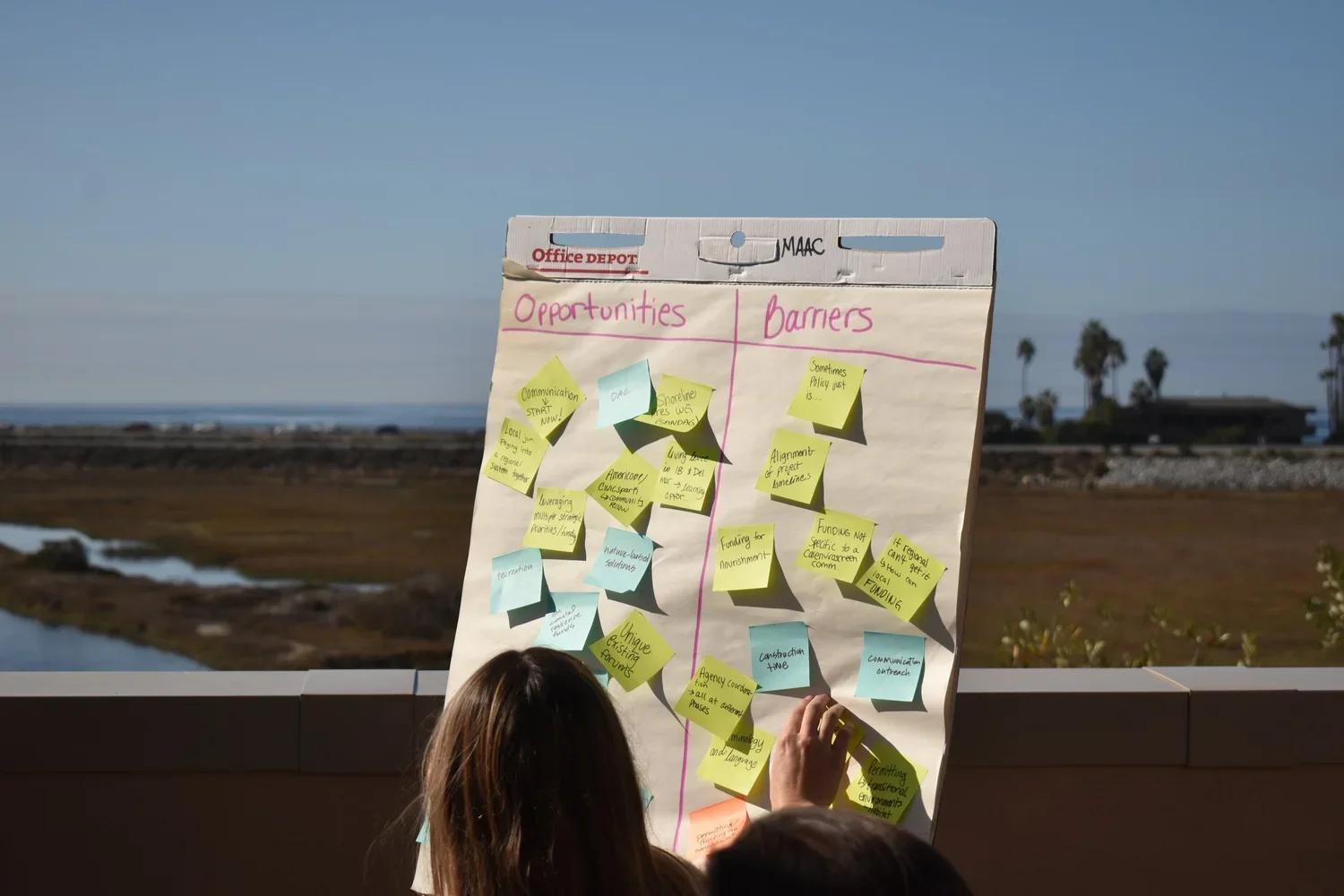
Santa Cruz’s resilience work involves a broad range of stakeholders, including recreation groups, Indigenous communities, regulators, and environmental and social justice organizations. Consistent, robust engagement is used to surface diverse perspectives, share science, and co-develop recommendations that inform leadership decisions and guide implementation.
Leadership Perspective
Tiffany Wise-West, Sustainability and Resiliency Officer, City of Santa Cruz
Tiffany Wise-West brings a systems-level view to Santa Cruz’s resilience work, shaped by the city’s layered landscapes and deeply engaged community.
Santa Cruz’s natural systems — the ocean, river, mountains, forests, and open space — are all interconnected, and so are the challenges they face. Tiffany emphasizes that learning from other communities is essential.

Understanding what others are doing, the challenges they face, and how they overcome them is “the only way we learn and are able to be more effective in our work.”
She is particularly energized by being in implementation mode. Advancing three coastal restoration projects through design and construction — with strong community backing and close Indigenous partnerships — reflects years of planning and engagement translating into on-the-ground action.
Tiffany is also clear-eyed about the complexity of managing the coast. Many people are resistant to change, and agreement on how the coastline should evolve is unlikely. Her priority is to continue reaching as many groups as possible, provide science-based information back to the community, elevate community-driven recommendations, and secure resources to implement leadership’s direction within regulatory and cost realities.
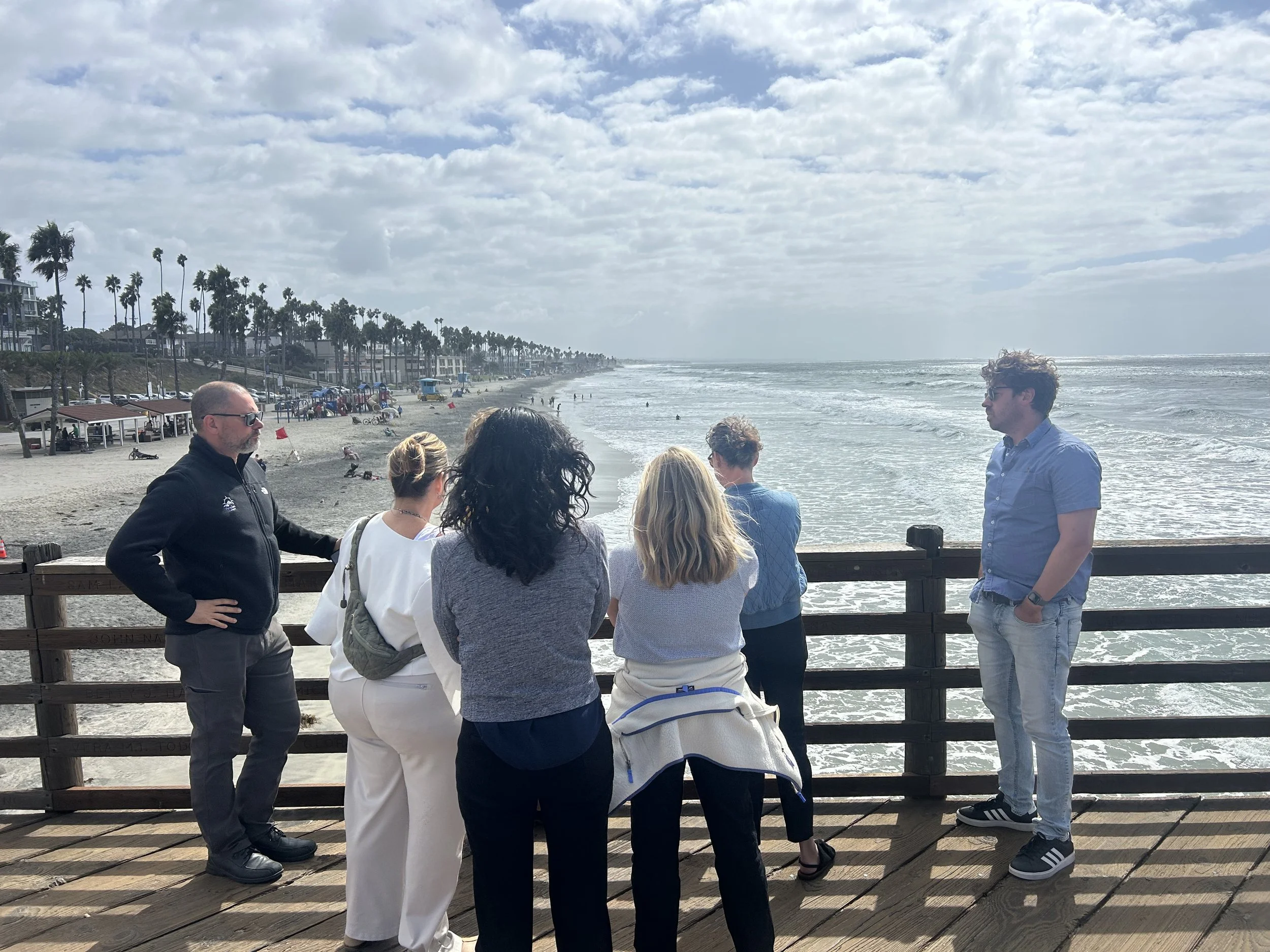
One way she brings this work to life is through walking tours of West Cliff Drive, where a decade of study, debate, regulatory navigation, and lived experience tells a clear story. For many residents, seeing the full arc of the work — the data, differing opinions, potential futures, and real costs of inaction — builds understanding and appreciation for the scale of what it takes to steward the coast responsibly.