
Digital Repository
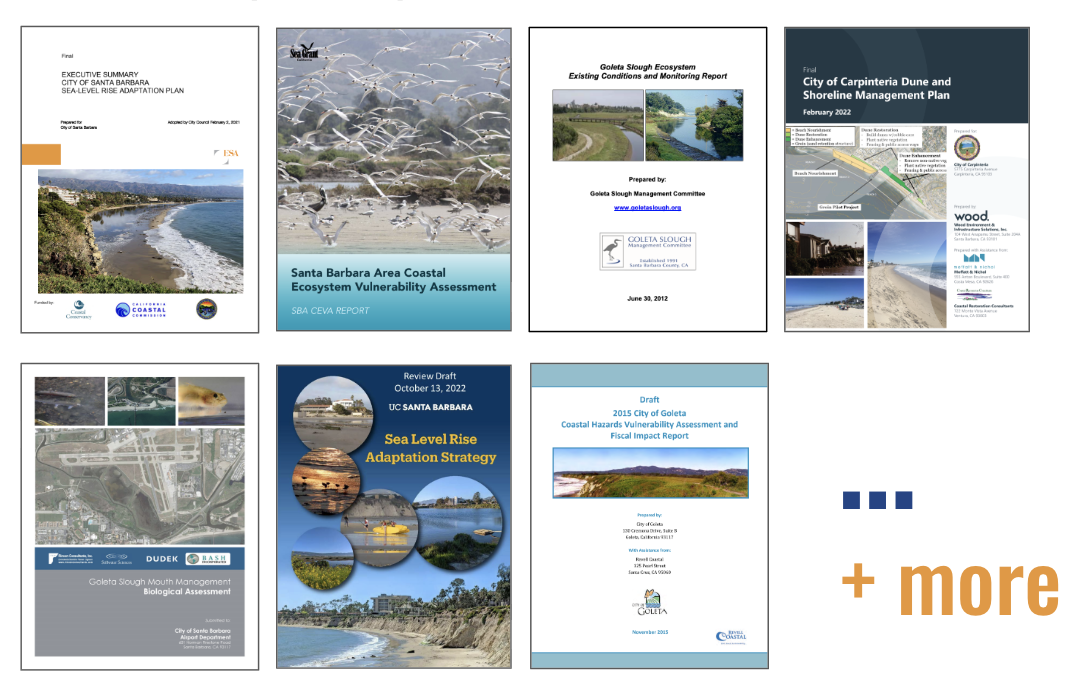
This digital repository is a hub of a knowledge collection and synthesis, including review of existing reports and studies, to advance work, rather than duplicate existing and previous efforts. Using this repository, the Initiative conducted a comprehensive analysis to synthesize challenges facing the area, including sea level rise, flooding, and other climate-driven impacts and illustrate how they interact with the Goleta Slough.
-
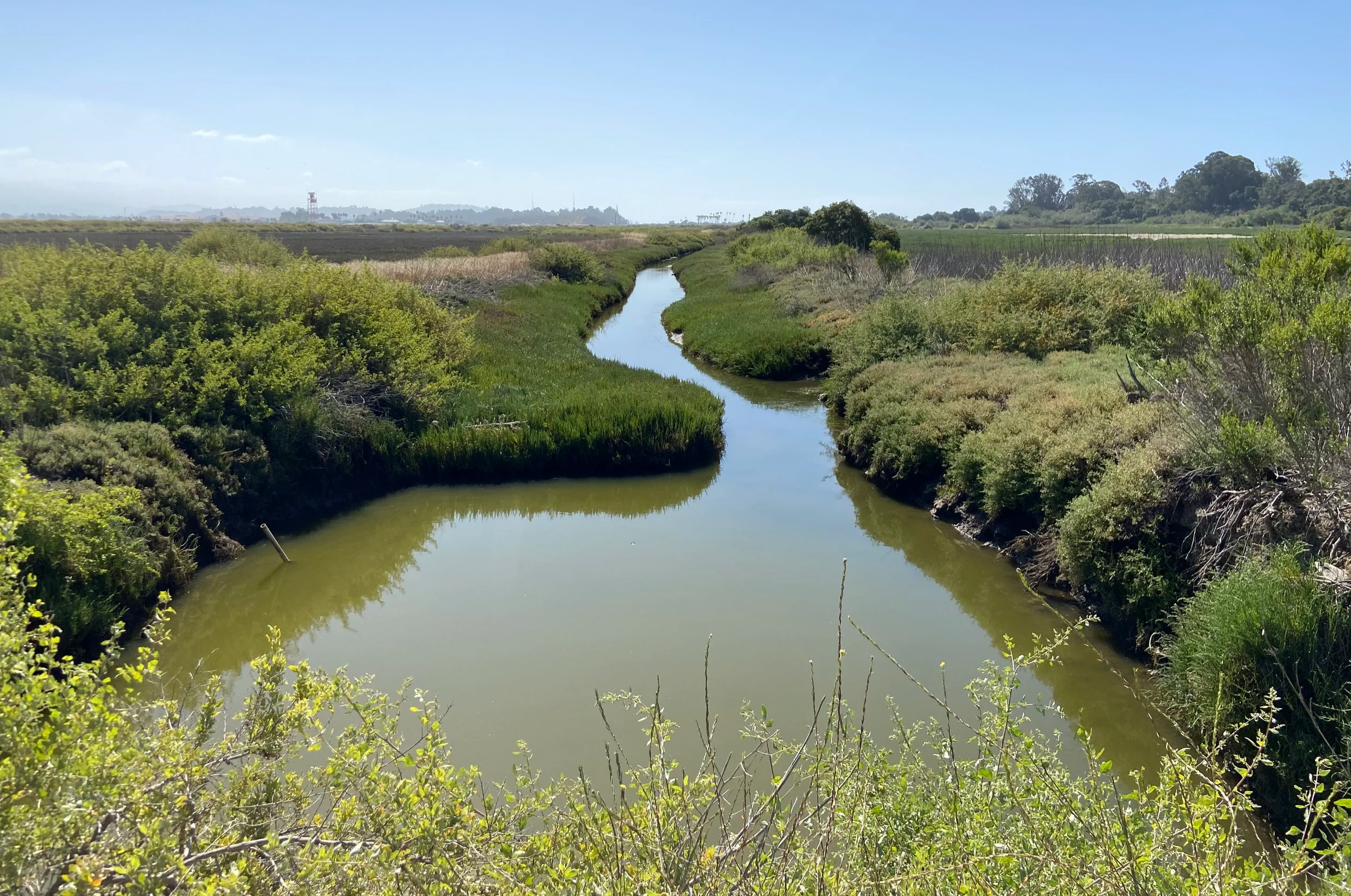
The Goleta Slough is central to the natural ecosystem in the Santa Barbara region, supporting ecological diversity and important watershed and shoreline processes. The Slough is also a built environment, incrementally filled and hemmed in by more than a century of urban expansion and economic growth.
The challenges of managing the Slough in relation to the built environment have been an on-going concern for the last half-century, and a specific focus of the Goleta Slough Management Committee since the early 1990s. This management complexity is further exacerbated due to the array of governing jurisdictions and land owners in the Slough area.
Beyond its inherent management challenges, Goleta Slough faces the mounting threat of climate change, which is expected to bring more severe storms, increased flooding, coastal erosion, and rising sea levels. These physical processes manifest as coastal hazards in the built environment, causing increasing damage to development, infrastructure, public safety, the local economy, community well-being, and natural ecosystems. These effects are also compounded by increased drought, wildfire, and extreme heat days projected for the larger region.
-
This report analyzes and summarizes previous technical and scientific studies as well as governmental plans to identify and elevate universally identified regional challenges, particularly related to future climate impacts, and synthesize priorities for adaptation and response.
This report illustrates the dynamics of the ecosystem and natural landscape of the Goleta Slough and surrounding areas, and highlights a historic trend of built assets in the Goleta Slough area being consistently prioritized over the natural ecosystem.
-
These priorities were identified through an analysis of 95+ documents created/published over the last 30 years and provide the evidence base for advancing efforts that increase coastal resilience.
Understanding how sudden-onset shocks and the long-term stresses impacting the Slough interrelate in its complex socio-ecological system will inform future steps for the Initiative, particularly in determining the selection criteria for prioritizing adaptation strategies and projects that will deliver the greatest resilience benefit to communities.
-
Analysis of the documents reveals that the top shocks and stresses to the Slough environs varied widely across different geographic scales, but that general environmental degradation, including the loss of biodiversity, was the most referenced concern. Other frequently referenced shocks and stressors included both coastal/tidal and rainfall flooding and coastal erosion.
Results identify universal social and environmental priorities for the region as:
Ecosystem Protection and Stewardship
Coastal Resilience and Adaptation
Collaborative and Forward-Looking Governance
Climate Mitigation and Resource Sustainability
Sustainable Growth and Mobility
Community Well-Being and Equity
This report underscores a need for increasing coastal resilience to safeguard the well-being of the region and its residents through strategic adaptation actions that both recognize the critical importance of the natural and social dimensions of the Slough and leverage the decades of shared community and governmental commitment to the proactive management of the Slough.
In the face of increasing climate impacts, a significant decision point has been reached that signals the need for a transformative shift in the approach to the Goleta Slough area: investments must prioritize the health and restoration of natural systems to ensure long-term socio-ecological vitality and resilience.
-
This report serves as part of the evidence base to inform the Initiative’s ultimate goal to identify and support strategies that push for this new, more resilient paradigm – prioritizing approaches rooted that deliver multiple benefits to restore and conserve natural resources, reduce harms to valuable infrastructure, protect recreational activities and public spaces, and highlight the cultural heritage of the Goleta Slough and surrounding coastal area.
Environmental changes, inherent management challenges, and mounting threats of climate change all reiterate the need for increasing coastal resilience to safeguard the well-being of the region and its residents through strategic adaptation actions that not only recognizes the critical importance of the natural and social dimensions of the Goleta Slough area, but also leverages the decades of shared community and governmental commitment to the proactive management of the Slough.
Resources
In addition to the Digital Repository, the Initiative is leading a community-centered engagement process to build on these learnings and understand the needs of local residents. Ultimately, the report and community engagement together will inform a process for resourcing and accelerating tangible projects for resilience implementation.
With the goal to move from decades of planning to implementation, the work ahead necessitates sustained collaboration across jurisdictions and meaningful engagement with the communities who live, work, and recreate in and around the Goleta Slough.